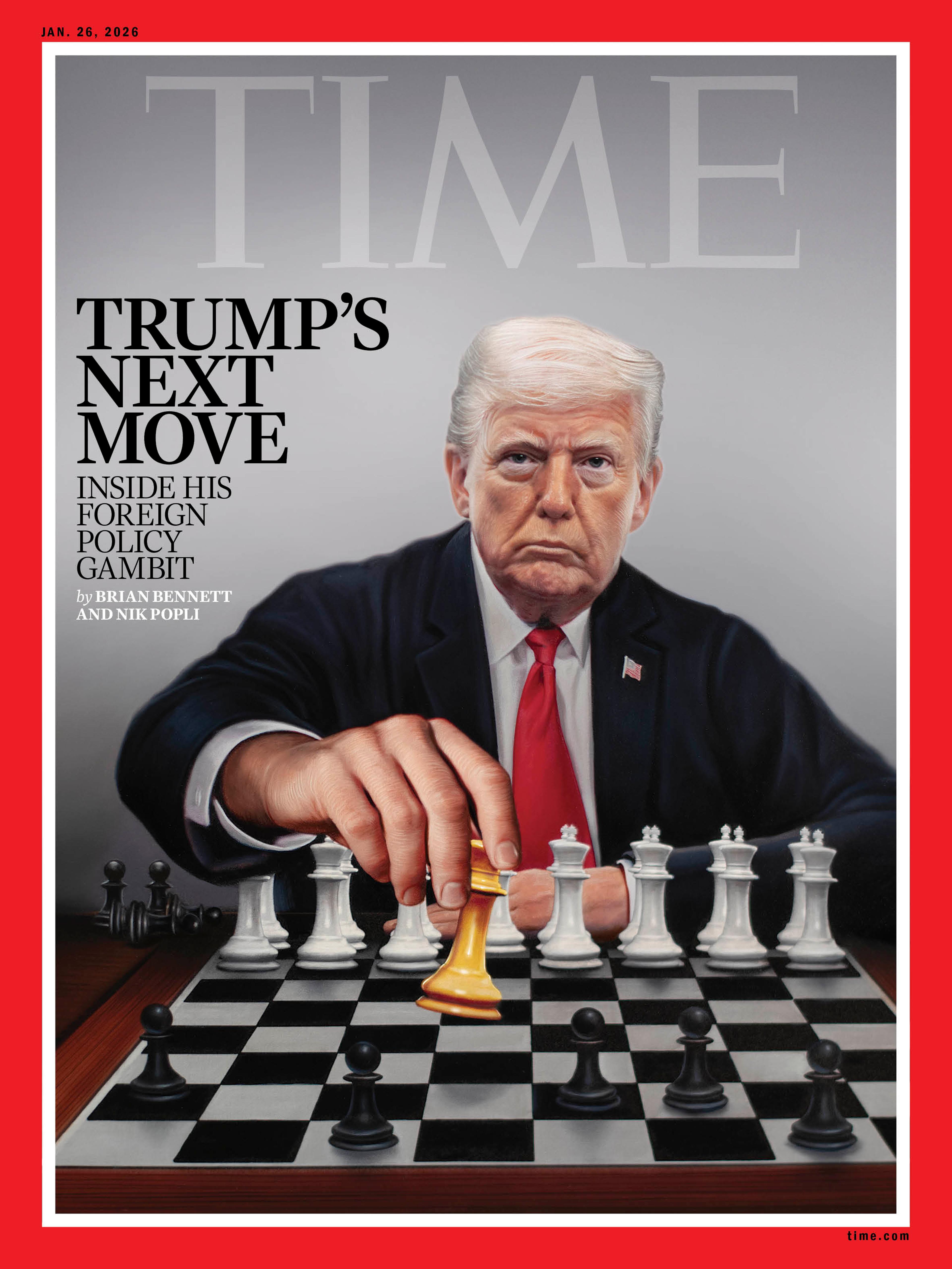
Donald Trump came into his second term with a promise that distinguished him from every other major figure in American politics: he would end wars, not start them. More than a year into his presidency, he is pursuing that promise on multiple fronts simultaneously — engaging in direct and indirect negotiations over the conflict in Ukraine, attempting to broker a broader regional arrangement in the Middle East, and projecting a posture toward China that mixes confrontation on trade with hints of accommodation on security. The results, so far, are genuinely mixed — real movement in some areas, genuine alarm among allies and analysts in others.
Ukraine: The Deal Nobody Fully Trusts
The most consequential of Trump's peace gambits involves Ukraine, where his administration has pushed hard for a negotiated end to the war that Russia launched with its full-scale invasion in February 2022. Trump's approach has been controversial from the start. He has pressured Ukrainian President Volodymyr Zelensky to come to the table while simultaneously signaling a willingness to accept Russian territorial gains — a position that European allies and many within the U.S. foreign policy establishment regard as a dangerous capitulation to aggression.
The administration's argument is straightforward: the war cannot be won militarily at an acceptable cost, continued fighting means continued Ukrainian casualties and continued risk of escalation, and a negotiated settlement — even an imperfect one — is better than indefinite conflict. Trump and his advisors have also argued, with some justification, that European nations need to take greater responsibility for their own security regardless of how the Ukraine conflict ends.
Critics counter that any settlement that rewards Russian aggression with territorial gains sets a precedent that will encourage further aggression — not only by Russia, but by other revisionist powers watching closely how the United States responds when its commitments are tested. The concern is not abstract: Taiwan, in particular, is watching the Ukraine situation as a potential indicator of how much U.S. security guarantees can be relied upon.
The Middle East: Movement Amid Chaos
In the Middle East, Trump's approach has been characteristically transactional. His administration has worked to broker expanded normalization agreements between Israel and Arab states, building on the Abraham Accords of his first term. There has been genuine progress on some fronts — additional Arab states have moved toward normalization — but the ongoing conflict in Gaza has complicated the regional picture enormously.
Trump's approach to Gaza has drawn fierce criticism from human rights organizations and from significant portions of the American public. His administration's early posture of strong support for Israeli military operations, combined with statements that critics characterized as dismissive of Palestinian civilian casualties, generated significant international blowback. The administration has since modulated its position somewhat, pressing for humanitarian pauses and increased aid access, but the fundamental tension between U.S. support for Israel and U.S. claims to be an honest broker in the region remains unresolved.
The broader regional architecture that Trump's team envisions — a U.S.-backed security arrangement linking Israel, Saudi Arabia, and other Gulf states against Iranian influence — is ambitious and potentially significant. But it requires threading multiple needles simultaneously, and the Gaza conflict has made the threading considerably harder.
The Method Behind the Apparent Madness
To understand Trump's approach to these negotiations, it helps to understand the theory of diplomacy that animates it. Trump and his advisors fundamentally distrust the multilateral, process-heavy approach to international relations that has characterized U.S. diplomacy for most of the post-Cold War era. They believe that direct personal engagement between leaders, backed by credible economic and military leverage, produces better outcomes than endless rounds of technical talks among career diplomats.
There is something to this critique. The conventional diplomatic approach has produced some genuine successes but also some spectacular failures — the Iran nuclear deal, the Oslo process, decades of attempts to denuclearize North Korea that yielded nothing. The argument that different methods might produce different results is not inherently unreasonable.
The risk is that Trump's personalized, transactional approach substitutes dealmaking for strategy. A deal that ends fighting in the short term but undermines the international norms and alliance structures that prevent larger conflicts in the long term may not, on balance, be a good deal — even if it can be marketed as a win.
What the Allies Are Saying Privately
In public, America's European and Asian allies have been carefully diplomatic about Trump's peace initiatives. In private, the conversations are considerably more anxious. Senior officials in multiple NATO capitals have expressed concern that Trump's eagerness to declare diplomatic victories could lead to arrangements that paper over fundamental conflicts rather than resolving them — and that the United States' reliability as an alliance partner is being systematically undermined.
The concern is not simply about Ukraine or the Middle East in isolation. It is about the signal being sent to adversaries more broadly: that the United States under Trump is willing to accept outcomes that it previously declared unacceptable, that alliance commitments are negotiable rather than absolute, and that economic self-interest will consistently trump strategic considerations in American foreign policy decision-making.
The Bottom Line
Trump's peace diplomacy is producing real engagement and, in some cases, real movement. Whether that movement leads to durable peace or simply deferred conflict depends on details that are not yet visible and on the behavior of parties — Russia, Iran, various regional actors — whose interests are not aligned with American preferences. The honest answer is that it is too early to know, and anyone who tells you otherwise is selling something.
What is clear is that American foreign policy is in a period of genuine flux, with stakes that extend well beyond any individual negotiation. The choices being made now about Ukraine, the Middle East, and the broader architecture of international security will shape the world that Americans — and everyone else — live in for decades to come.