Jeffrey Epstein's abuse of dozens, likely hundreds, of underage girls and young women over more than two decades was not the work of a lone predator acting on impulse. Court records, FBI files, victim testimony, and years of investigative reporting — most notably the Miami Herald's 2018 "Perversion of Justice" series by reporter Julie K. Brown — describe a deliberate, self-sustaining system for finding, grooming, and exploiting victims. Understanding how that system operated helps explain both the scale of the abuse and why it went largely unpunished for so long.

A Pyramid Built on Referrals
At the center of the operation was a simple, chillingly effective mechanic: girls who had already been abused were asked to bring in others. Prosecutors and victims described it as a pyramid scheme of abuse. A girl would be offered a few hundred dollars, ostensibly for giving Epstein a massage at one of his residences — most often his Palm Beach, Florida mansion, but also properties in New York, New Mexico, and his private island in the U.S. Virgin Islands. The "massage" would then escalate into a sexual encounter. Afterward, the girl would be offered additional payment for every new girl she recruited into the same arrangement.
This referral structure meant Epstein and his associates didn't need to seek out every victim directly. The network expanded largely on its own, propagated through school friendships and neighborhood connections, particularly around Palm Beach's working-class communities. Investigators later identified dozens of victims recruited through this chain, many of them 14 to 17 years old at the time.
Ghislaine Maxwell's Role
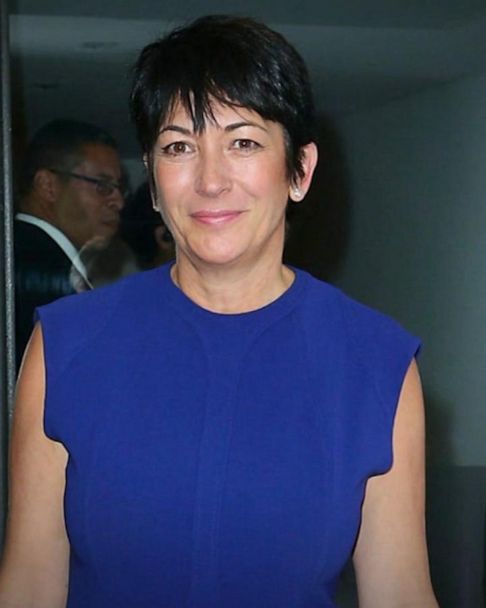
British socialite Ghislaine Maxwell, Epstein's longtime companion and associate, was central to the recruitment machinery, according to federal prosecutors. She was convicted in December 2021 on federal charges including sex trafficking of minors and is currently serving a 20-year sentence. Prosecutors said <cite index="10-1">Maxwell recruited several of Epstein's victims and at times participated in the abuse herself.</cite> Trial testimony from multiple accusers described Maxwell as someone who would befriend girls, gain their trust, normalize the "massage" arrangement, and help make the situation feel less alarming to teenagers who might otherwise have been suspicious of a wealthy older man's interest in them.
Other employees and associates in Epstein's orbit — assistants, schedulers, and household staff — were also accused in court filings of playing logistical roles, such as arranging transportation for girls to and from Epstein's properties, though most were never criminally charged.
Targeting Vulnerability
A consistent thread across victim accounts is that recruitment focused on girls who were, in one way or another, vulnerable. Many came from unstable homes, single-parent households, or families experiencing financial hardship. Some had histories of trauma or were disconnected from adults who might have protected or believed them. The initial cash offer for a "massage" — often $200 to $300 — was substantial money for a young teenager, and Epstein was presented to them as a successful businessman offering a harmless, well-paid errand.
This targeting of vulnerability served two purposes for the abuser: it made victims more susceptible to the initial approach, and it made them less likely to be believed or supported if they later reported what happened. Several victims have said in testimony and interviews that they felt too ashamed, scared, or powerless to tell anyone at the time, particularly given Epstein's wealth, his relationships with prominent and powerful people, and his access to expensive lawyers.
Grooming and Psychological Control
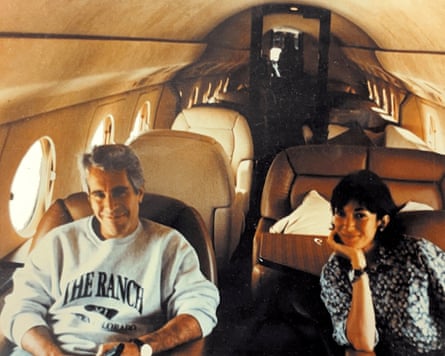
Beyond the cash transactions, survivors and investigators have described a broader pattern of grooming designed to create dependency and secrecy. This included gifts, promises of help with school or career opportunities, and a gradual escalation of contact intended to normalize what was happening. Girls were sometimes flown on Epstein's private plane or brought to his various homes, which reinforced a sense of being part of an exclusive, high-status world — one that could feel simultaneously exciting and disorienting to a teenager.
Investigators have also pointed to isolation as a recurring feature: victims were often kept from a full understanding of how many other girls were involved, and encouraged, implicitly or explicitly, not to discuss what was happening with outside friends or family. This combination of financial incentive, flattery, apparent glamour, and secrecy is a pattern well documented in trafficking and abuse cases generally, not unique to Epstein, but he and Maxwell are alleged to have run it with particular scale and organization.
The First Prosecution — and Its Failures
Epstein's conduct first drew law enforcement attention in Palm Beach in 2005, after a parent reported that her teenage daughter had been paid for a "massage" that turned sexual. A subsequent police investigation identified numerous underage victims. Despite this, Epstein reached a controversial non-prosecution agreement with federal prosecutors in Florida in 2007, negotiated in part by then-U.S. Attorney Alexander Acosta. Under that deal, Epstein pleaded guilty to lesser state charges in 2008, served just 13 months in a county jail — with extensive work-release privileges that allowed him to leave for much of each day — and the federal case against him, along with any charges against potential co-conspirators, was effectively shut down. Victims were not properly notified of the deal, a fact that later courts found violated federal victims' rights law.
Brown's 2018 Miami Herald investigation reopened public scrutiny of that deal and located and interviewed many victims for the first time in years, prompting renewed pressure on federal authorities.
The 2019 Federal Case and Epstein's Death
In July 2019, federal prosecutors in the Southern District of New York indicted Epstein on sex trafficking charges, alleging he had abused dozens of girls between 2002 and 2005 at his Manhattan mansion and Palm Beach estate, using the same recruitment structure identified over a decade earlier. Epstein was denied bail and died in his jail cell in August 2019, a death ruled a suicide by the New York City medical examiner, though it has remained a subject of public conspiracy theories and continued congressional and journalistic interest.

Maxwell's Conviction and Ongoing Fallout
Maxwell's 2021 conviction did not end public interest in the case. In the years since, congressional committees, the Department of Justice, and news organizations have continued to review and release documents related to Epstein's associates, finances, and the full scope of his network. Reporting in 2026 noted that <cite index="10-1,10-3">Maxwell declined to answer questions from House lawmakers during a deposition, invoking her Fifth Amendment rights, though she indicated she might be willing to testify if her sentence were commuted.</cite> Investigative journalists who broke the original case, including Brown, have continued to argue that the full scale of who knew about or facilitated the abuse has not been fully accounted for, and have criticized subsequent handling of victim-related records, including reports that sensitive and identifying material about victims was inadequately redacted in later document releases.
Why the Pattern Matters
Beyond the specifics of the Epstein case, the recruitment structure it revealed — cash incentives, victim-to-victim referral, targeting of vulnerable teenagers, grooming through gifts and access, and reliance on wealth and status to deter reporting — is a pattern recognized broadly in trafficking and child exploitation cases. Advocacy groups and law enforcement often point to the case as a stark illustration of how such networks can operate for years in plain sight, protected less by secrecy than by the social and legal deference extended to a wealthy, well-connected individual.
For readers wanting primary documentation rather than secondhand summary, the Miami Herald's original "Perversion of Justice" series, unsealed federal court filings from both the 2019 indictment and Maxwell's 2021 trial, and subsequent congressional document releases remain the most detailed and directly sourced material on how the network operated.