When the Justice Department released millions of pages of Epstein files this year, it included FBI summaries of interviews with a woman who allegedly told investigators that she was forced to perform oral sex on Trump when she was 13 or 14 years old in the 1980s, claims she says she fought back against and that led to Trump allegedly hitting her—allegations that remain unverified, uncorroborated, and disputed by Trump, but which the FBI apparently deemed credible enough to conduct four separate interviews, while simultaneously at least 53 pages of interview notes and related documents have mysteriously gone missing or remain heavily redacted by the Justice Department.
The Serious Allegation: What's on Record
The FBI files contain summaries of three interviews conducted with an unnamed woman who alleges that Epstein introduced her to Trump when she was between 13 and 15 years old, and that Trump subsequently sexually assaulted her. According to the documents, she alleged that Trump forced her head down to his exposed penis, which she then bit. She claims Trump responded by punching her in the head and kicking her out.
The woman allegedly told investigators that she had two additional interactions with Trump but didn't elaborate on those in the interviews. She also claimed that Epstein and Trump used degrading terms to describe girls—"fresh meat," "untainted," "not jaded"—and that she heard them discussing blackmail schemes and illegal activities like "washing money through casinos."
This is the serious stuff. This is what's actually in the documents.
But here's what matters: these allegations are uncorroborated. No charges have been filed. No law enforcement body has pursued this against Trump. Trump has denied the allegations. And the woman's background includes criminal history—charges for filing false food stamp claims and stealing from her husband—which legal experts note affects credibility assessments.
The Missing Documents Problem
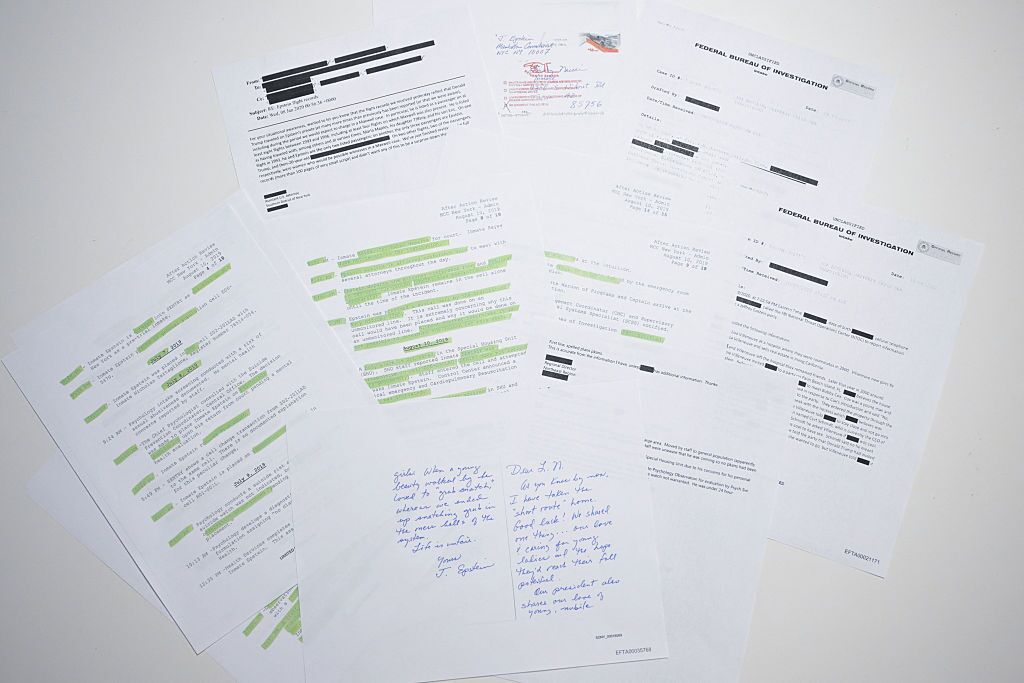
What's troubling is what's not in the files. When the Epstein files were first released, multiple news outlets discovered that interview documents were missing. NPR found that approximately 53 pages of FBI interview documents and accompanying notes were not included in the public database.
Of 15 documents listed in logs for this particular accuser, only seven appeared in the Epstein files database. That means eight documents—including detailed interview notes—were withheld.
A federal judge ordered the Justice Department on June 26 to either release these unredacted documents or explain why they can't be released by July 2. The judge, U.S. District Judge Emmet Sullivan, also ordered the DOJ to release interview notes underlying FBI summaries of allegations against Trump.
The Justice Department claimed the interviews were "incorrectly deemed duplicative" and said it would make unredacted versions available to members of Congress, but not the public. That's not transparency. That's selective disclosure.
Why This Matters
There's a legitimate question: why are documents about Trump's alleged involvement being treated differently than documents about others mentioned in the Epstein files? Why the selective redaction? Why the missing pages?
The Trump administration, through Acting Attorney General Todd Blanche, has defended the redactions as necessary to protect privacy and victim identities. But critics argue the redactions go far beyond what's necessary and that they're creating opportunities for people to claim files are being hidden to protect Trump.
Independent journalist Katie Phang sued the DOJ over the redactions, arguing they violate the Epstein Files Transparency Act. A federal judge agreed that at least some of the redactions need to be explained or removed.
What the FBI Apparently Thought
According to reporting by Julie K. Brown of the Miami Herald, an anonymous DOJ official said that investigators believed the allegations were credible and wouldn't have interviewed the woman four times if they didn't think there was something to the story. But credibility assessment by investigators isn't the same as corroboration. It's not proof. It's not even an official conclusion.
The Debunked 345-Times Claim
Circulating on social media is a claim that the new Epstein files showed Trump visited Epstein's island 345 times. This is completely false. Snopes investigated and found zero credible reporting of this claim. No news organization reported it. No documents support it. It's a hoax that spread because people wanted to believe it.
This is important because it shows how the actual allegations get muddied by conspiracy theories and false claims. The real allegations are serious enough without inventing fake ones.
Trump's Position
Trump has consistently denied any wrongdoing. In January 2026, he said he was "never" on Epstein's island. He's acknowledged knowing Epstein in the 1990s and early 2000s but says they had a falling out in the mid-2000s. His administration has not been criminally implicated in any Epstein-related crimes.
The White House has called the allegations "unfounded and false" and suggested that if they had credibility, they would have been "weaponized" against Trump already.
The Real Question
The question isn't whether these allegations are true—they're not proven and remain disputed. The question is why documents are being withheld or redacted in ways that prevent public scrutiny.
If the allegations are baseless, transparency serves Trump's interests. Hiding documents serves nobody's interests except those wanting to suggest there's something to hide. A federal judge apparently agreed, which is why the DOJ was ordered to either release or explain the redactions by July 2.
Whether the full truth comes out depends on whether the judge's order is actually followed. That's where we are: waiting to see if the government will finally make public the documents it's been withholding.