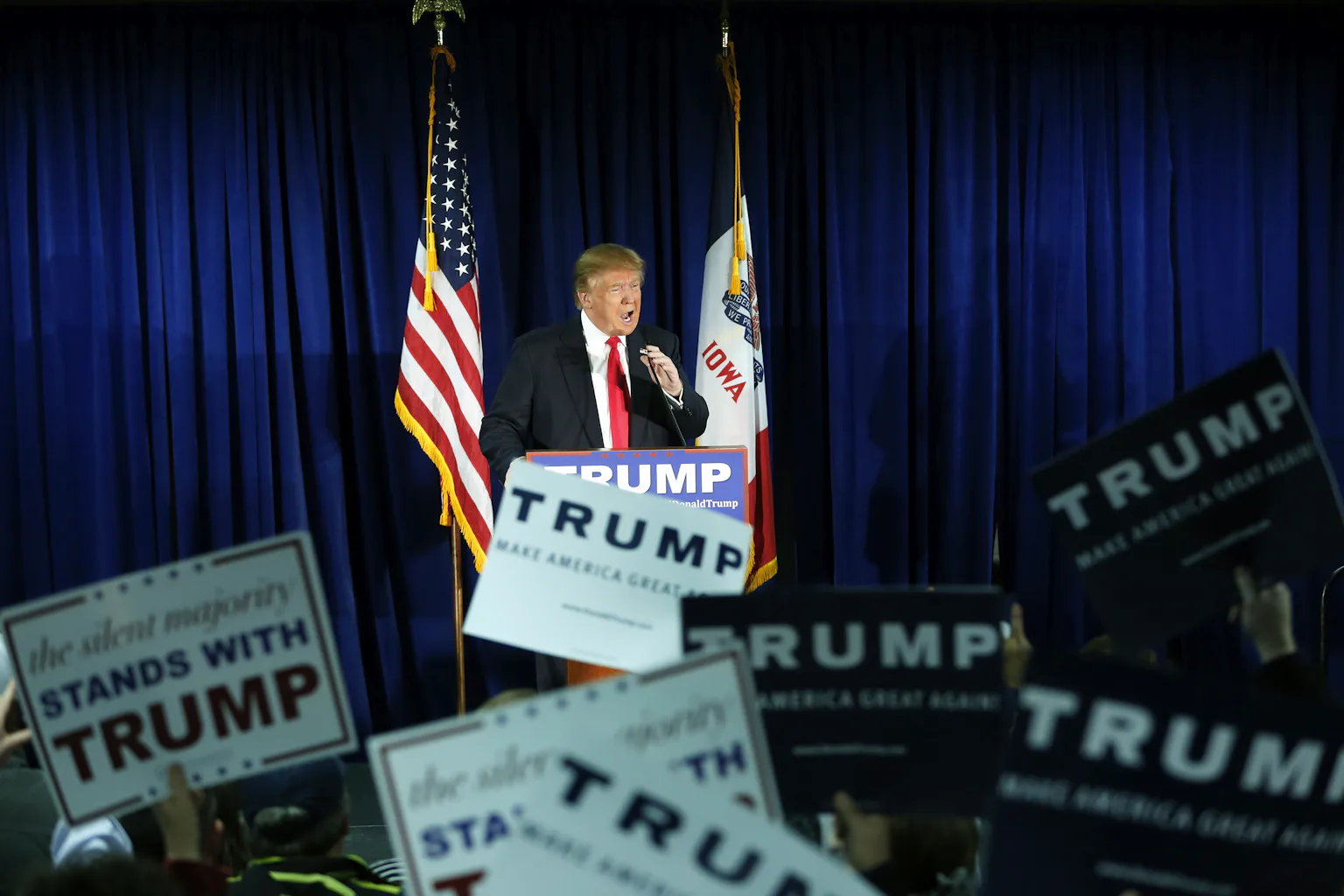
The "just a businessman" framing has always been reductive — and it cuts both ways. His critics use it to suggest he lacks the depth, the temperament, and the institutional understanding that the presidency demands. His supporters use it to suggest he brings a results-oriented, dealmaking efficiency that career politicians lack. Both framings capture something real and miss something important.
Donald Trump is not just a businessman. He is a specific kind of businessman — one whose career has been built on branding, negotiation, real estate leverage, and the cultivation of a public persona that is itself a product. Understanding what that specific background brings to the White House, and where it creates blind spots, is more useful than either the dismissive or the celebratory version of the businessman narrative.
What the Business Background Actually Developed
Trump's business career is genuinely unusual as preparation for the presidency, but not in the ways usually cited. The skills it developed most intensively are: the ability to negotiate under pressure, comfort with risk and with the possibility of failure, the instinct to use attention and media presence as strategic tools, and a particular kind of decisiveness that comes from years of making decisions with incomplete information and living with the consequences.
Presidential historians who have studied effective executives note that these are not trivial skills. The presidency involves continuous high-stakes negotiation — with Congress, with foreign leaders, with domestic interest groups, with the media. It involves decisions that must be made without complete information. It involves the management of public perception as a political resource. A president who is uncomfortable with any of these dimensions is going to be less effective than one who is not.
Trump's specific business background — real estate, hospitality, entertainment — also developed a granular understanding of how physical investment, development, and infrastructure work that is relevant to a president dealing with infrastructure policy, economic development, and the practical mechanics of how large projects get built. His instinct toward visible, tangible results — buildings, walls, factories — reflects a businessman's preference for concrete outcomes over procedural achievements.
The Dealmaking Model and Its Presidential Application
Trump has described his approach to international affairs explicitly in dealmaking terms, and in some cases, the framework has produced results that conventional diplomatic approaches had failed to achieve. The Abraham Accords — the normalization agreements between Israel and the UAE, Bahrain, Sudan, and Morocco — were negotiated through a process that bypassed traditional State Department channels and relied heavily on personal relationships, financial incentives, and the application of direct pressure in ways that the career diplomatic establishment considered unorthodox.
The result was the most significant shift in Middle Eastern diplomatic relationships in decades. Countries that had maintained formal hostility toward Israel for fifty years established normal relations within months. The conventional wisdom that such normalization was impossible without a Palestinian state was proven wrong. The dealmaking instinct — the willingness to approach an apparently intractable problem as a negotiation with addressable interests on all sides — produced something that decades of traditional diplomacy had not.
The same framework has produced less uniformly positive results in other contexts. Trade negotiations with China, which Trump approached as bilateral deal-making, produced agreements that were not fully implemented and a trade relationship that remains more conflicted than before the negotiations began. The North Korea diplomacy — the summits with Kim Jong-un that generated enormous publicity — did not produce the denuclearization that was their stated goal. The dealmaking model works better in some contexts than others, and the president's instinct has not always distinguished reliably between the contexts where it applies and those where it does not.
Where the Business Background Creates Blind Spots
The most significant limitation of the businessman-president model is institutional. The presidency operates within and through institutions — Congress, the courts, the permanent executive branch, allied governments, international organizations — that do not respond to the negotiating dynamics Trump is most comfortable with. You cannot fire a senator the way you fire an employee. You cannot renegotiate a constitutional provision because you think the terms are unfair. You cannot walk away from a Supreme Court ruling because you think the court got it wrong.
Trump's relationship with institutional constraints has been consistently adversarial — not because he is uniquely authoritarian, but because his professional background did not develop the instinct to work within and through institutions rather than around them. A businessman who disagrees with a regulator tries to get the regulation changed or to find a workaround. A president who operates that way finds himself in conflicts with co-equal branches of government that create friction, legal challenges, and political costs.
The second limitation is the distinction between private-sector and public-sector accountability. In business, the relevant metric is profit — a single number that aggregates everything else. The presidency does not have an equivalent metric. The interests it must balance are plural, competing, and not reducible to a single measure. A president who defaults to thinking about outcomes in terms of a business metric — stock market performance, GDP growth, deal count — may systematically underweight the things that do not show up easily in numbers: institutional health, democratic norms, the interests of people who are not well-positioned in the market.
The Honest Assessment
Trump is more than just a businessman. He is a politician who has won two presidential elections, navigated four years of intense opposition in his first term, and is now serving a second term while managing a war, an economic transformation, and a political environment that would tax any president's capabilities. The businessman background is part of his profile, not the whole of it.
Whether that background has made him a better or worse president than someone with a different background would have been is ultimately unknowable — you cannot run the counterfactual. What you can say is that it has made him a distinctive president, one whose strengths and weaknesses follow patterns that are recognizable from his business career rather than from the conventional political biography. The dealmaker who produced the Abraham Accords is the same dealmaker whose North Korea negotiations stalled. The risk-taker who launched Operation Epic Fury is the same risk-taker whose business career included six bankruptcies. The pattern is consistent. Whether you see it as a feature or a flaw depends on how you weigh the outcomes.