Saturday afternoon in Toledo, Ohio. A street festival on a warm late-spring day. Families, music, food, the ordinary life of an American city enjoying a weekend. Then gunfire. At least twelve people wounded. The chaos of a crowd trying to understand what was happening and where to run. First responders arriving to a scene where the immediate danger had already passed but the damage had already been done.
The Toledo shooting is not the kind of event that produces sustained national coverage anymore. It was not a school. The death toll, as of the latest reporting, has not crossed the threshold that the American media has developed — through years of processing these events — as the line between a significant shooting and a national tragedy. Twelve wounded. No reported fatalities at publication time. In the taxonomy of American gun violence, this registers as a serious incident rather than a catastrophe.
That taxonomy is itself worth examining.
What Happened
The shooting occurred near a busy street festival in Toledo on the afternoon of Saturday, May 31. Police responded to reports of gunfire in the area and found multiple victims with gunshot wounds. At least twelve people were transported to area hospitals. The nature and severity of their injuries has varied in early reporting.
A suspect or suspects had not been publicly identified or apprehended at the time of initial reporting. Investigators were reviewing surveillance footage and interviewing witnesses. The festival — which drew hundreds of people to a public street in a residential and commercial area — was evacuated and shut down. The scene was secured.
The specific circumstances of how the shooting began — whether it arose from a confrontation between individuals, whether it was targeted or indiscriminate, whether the shooter or shooters were themselves attendees of the festival or arrived specifically to commit violence — had not been established in early reporting. Those details matter for understanding the event. They do not change its fundamental nature.
The American Context
The Gun Violence Archive, which tracks shootings in the United States, defines a mass shooting as an incident in which four or more people are shot, not including the shooter. By that definition, the Toledo festival shooting is a mass shooting. It is also, by that definition, one of hundreds that occur in the United States each year — a frequency so high that most of them receive, at most, local news coverage and a brief mention in national outlets before disappearing from the news cycle entirely.
The United States has more mass shootings per capita than any other wealthy nation. This is not a contested statistical finding. It is documented in peer-reviewed public health research, in FBI crime data, in the records of organizations across the political spectrum that track gun violence. The policy debate about what to do about this fact — or whether anything should be done, or whether the cause is guns or mental health or culture or something else — has been ongoing for decades without producing legislative resolution at the federal level.
In the current political environment, that debate is even further from resolution than it was five years ago. The Supreme Court's 2022 Bruen decision significantly narrowed the ability of states and localities to regulate firearms in public spaces. The Trump administration has not proposed federal gun legislation. Congressional Republicans, who control both chambers, have shown no appetite for gun control measures. Congressional Democrats, who support various measures, do not have the votes to pass them.
Toledo's Response
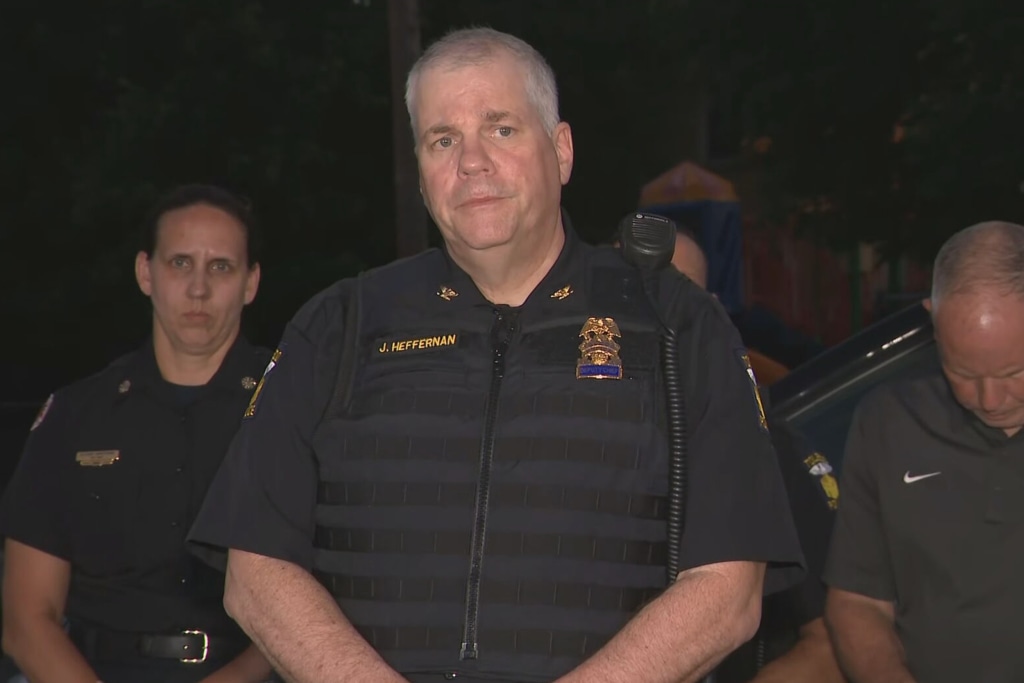
Toledo's mayor and police chief held a press conference in the hours after the shooting. The mayor expressed grief and called for community solidarity. The police chief outlined the investigation. Local officials thanked first responders. The language of these press conferences has become so familiar — so ritualized by repetition — that it is possible to anticipate almost exactly what will be said before it is said.
That familiarity is itself a data point. The ritual response to mass shootings in America has been refined through so many iterations that it no longer feels like a response to an emergency. It feels like a procedure — the thing that gets done after something terrible happens, performed smoothly because it has been performed many times before.
The twelve people who were shot in Toledo on Saturday afternoon did not experience it as a ritual or a statistic. They experienced it as violence — sudden, arbitrary, and real. Their recoveries will take time. The festival that was supposed to be a pleasant afternoon will be something else in their memories. Toledo will heal in the way American cities heal from these events: gradually, incompletely, with the knowledge that it could happen again anywhere, at any time, at any gathering of people enjoying a warm afternoon.
Because in America in 2026, it always could. And the systems designed to prevent it have not changed in ways that would make it less likely. That is the story that every shooting like this one tells, underneath the specific details of the specific event. It is a story that the country has not yet decided it wants to change.