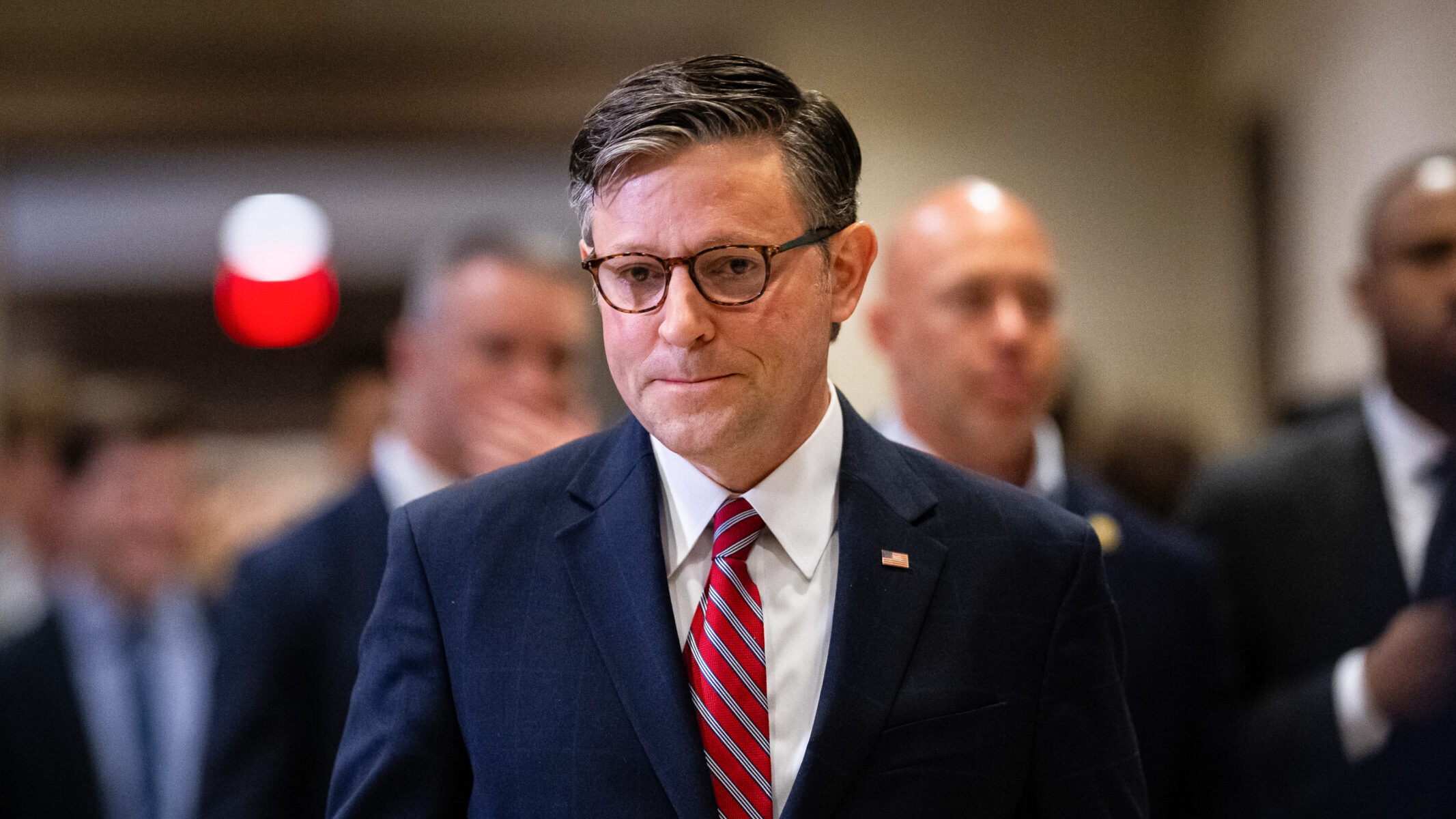
Town halls were not supposed to be this hard again. After the explosive constituent confrontations of 2017 — the shouting matches over the Affordable Care Act, the members of Congress who stopped holding them entirely rather than face their voters — Republican leadership had spent years managing the format carefully. Friendly audiences. Vetted questions. Controlled environments designed to produce usable footage rather than genuine accountability.
What happened this week was different.
A Republican congressman — facing constituents in a district that has trended increasingly competitive — walked into a town hall and confronted a room that had done its homework. The questions that came were not vague expressions of frustration. They were specific. They named documents. They cited votes. They connected the anti-weaponization fund, the Epstein file releases, and Trump's record in ways that suggested voters who have been paying attention and are not satisfied with what they have seen.
The Anti-Weaponization Fund Question
The question that drew the sharpest response came early. A constituent — a middle-aged woman who identified herself as a lifelong Republican — stood up and asked the congressman directly: why had his party voted to establish and fund the DOJ's anti-weaponization unit while simultaneously blocking the release of complete Epstein files? What, she asked, was being protected, and from whom?
The question landed because it connected two things that the congressman's leadership would prefer to keep separate. The anti-weaponization apparatus has been presented publicly as a mechanism for protecting ordinary Americans from politically motivated prosecution — a response to what Republicans characterized as the weaponization of federal law enforcement against Trump and his allies. Critics, including the constituent at the microphone, have argued it functions primarily as a tool for reversing prosecutions of Trump allies and insulating powerful people from accountability.
The Epstein files create a problem for that framing. If the party's concern is the weaponization of law enforcement against powerful people, what does it mean that the most comprehensive federal accountability effort involving powerful people — the investigation of Epstein's network — has proceeded with extraordinary slowness? The constituent's question implied an answer: the anti-weaponization unit protects the powerful. The Epstein slowdown protects the powerful. The pattern is the pattern.
The congressman's response was not compelling. He cited procedural complexities. He noted that some files remain sealed for legitimate investigative reasons. He pivoted to his committee work. The room was not satisfied. The follow-up questions came faster than he could manage them.
The Epstein File Demand
A second constituent, a younger man in the back, asked why his representative had not signed onto legislation requiring full and unredacted release of all Epstein-related FBI files. The Epstein Files Transparency Act has gathered co-sponsors from both parties. The congressman in the room had not signed on.
His explanation — that he supported transparency but wanted to ensure proper process — produced audible groans. Another constituent called out from the audience: "What process? It's been years." The congressman tried to restore order. The moderator called for quiet. It took several minutes for the room to settle.
What the exchange illustrated is the degree to which the Epstein files have become a litmus test that crosses traditional political lines. The people demanding full release are not a monolithic ideological bloc. They are conservatives who believe the files will implicate Democrats, progressives who believe they will implicate Republicans and their allies, survivors' advocates who simply want the record made complete, and voters of no particular ideology who have concluded that if powerful people are being protected, that protection is wrong regardless of which party benefits.
A Republican congressman who cannot explain why he opposes full transparency faces a constituency that includes his own base. That is an uncomfortable political position, and the town hall made it visible.
Trump's Record as a Liability
A third line of questioning addressed Trump directly — his record on the Epstein files, his administration's handling of the DOJ investigation, and his personal history with Epstein. The congressman deflected, citing Trump's statements about wanting transparency and noting that the administration had overseen some document releases.
A constituent responded by reading from a printed sheet: the specific FBI files that had been released in heavily redacted form, the names that remained blacked out, the depositions that remained sealed, the timeline of promises made and not kept. The congressman had no specific response to the specifics. He thanked the constituent for their engagement and called on someone else.
The room did not allow a clean transition. The level of preparation that constituents brought to this town hall — the printed documents, the specific citations, the follow-up questions that anticipated the deflections — reflected a voter base that is no longer willing to accept the general when it asks a specific question.
What This Predicts
Town hall confrontations do not directly determine election outcomes. Fired-up constituents in a meeting room are not necessarily fired-up voters in November. But they are a signal — about the intensity of feeling on particular issues, about the degree to which official explanations are failing to satisfy people who are paying attention, about the vulnerability of incumbents who have not developed credible positions on the questions that their constituents care most about.
The Epstein files are not going away as a political issue. The House Oversight Committee's investigation is producing new disclosures regularly. Sarah Kellen's testimony, the three new names referred to investigators, the expansion of the Prince Andrew probe — each new development refreshes the news cycle and brings new voters into contact with questions that their elected representatives are struggling to answer.
A Republican congressman who cannot explain his Epstein file position to his own constituents has a problem that will not be solved by better talking points. The constituents have read the documents. They have specific questions. The November reckoning is coming.