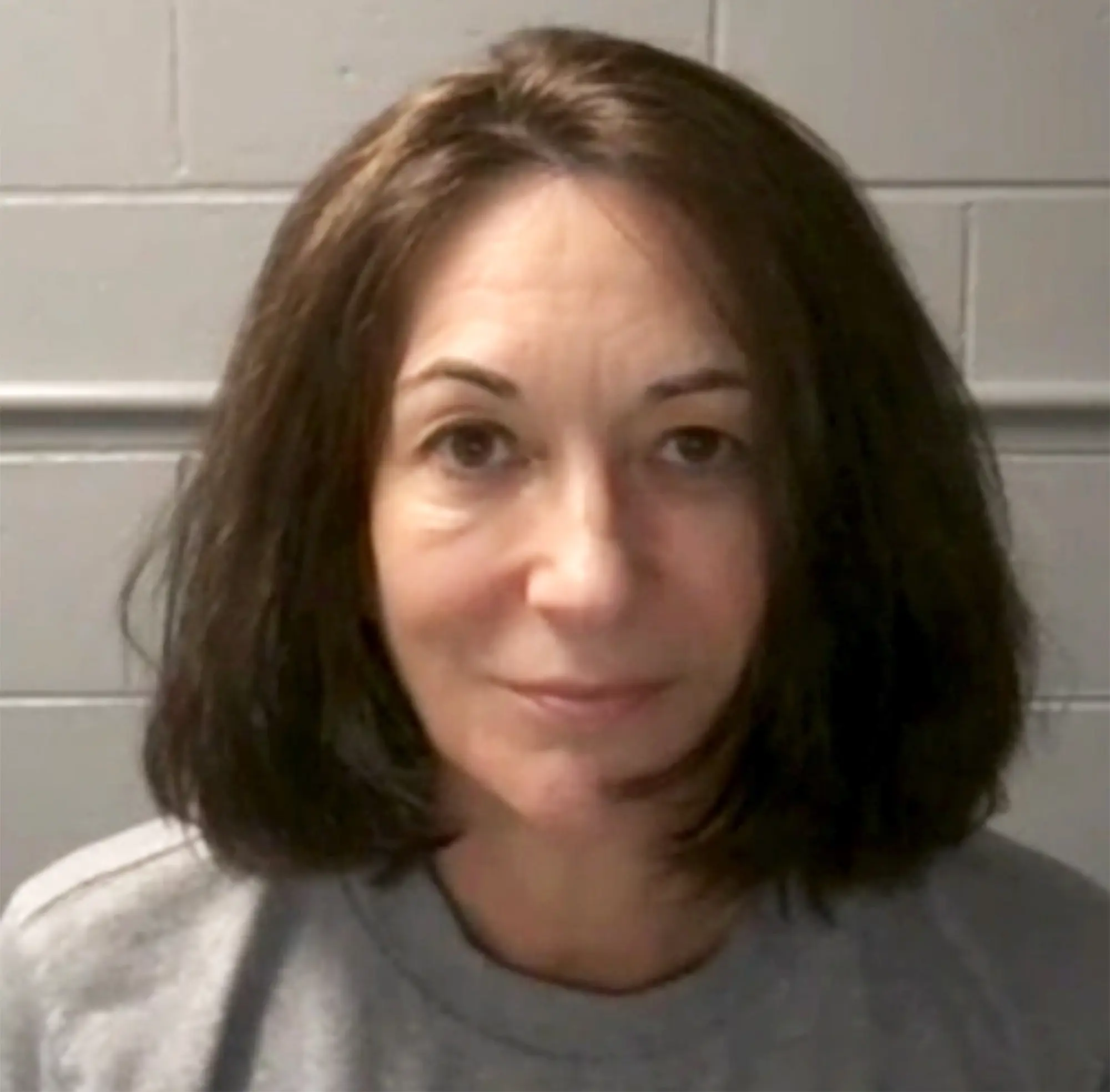
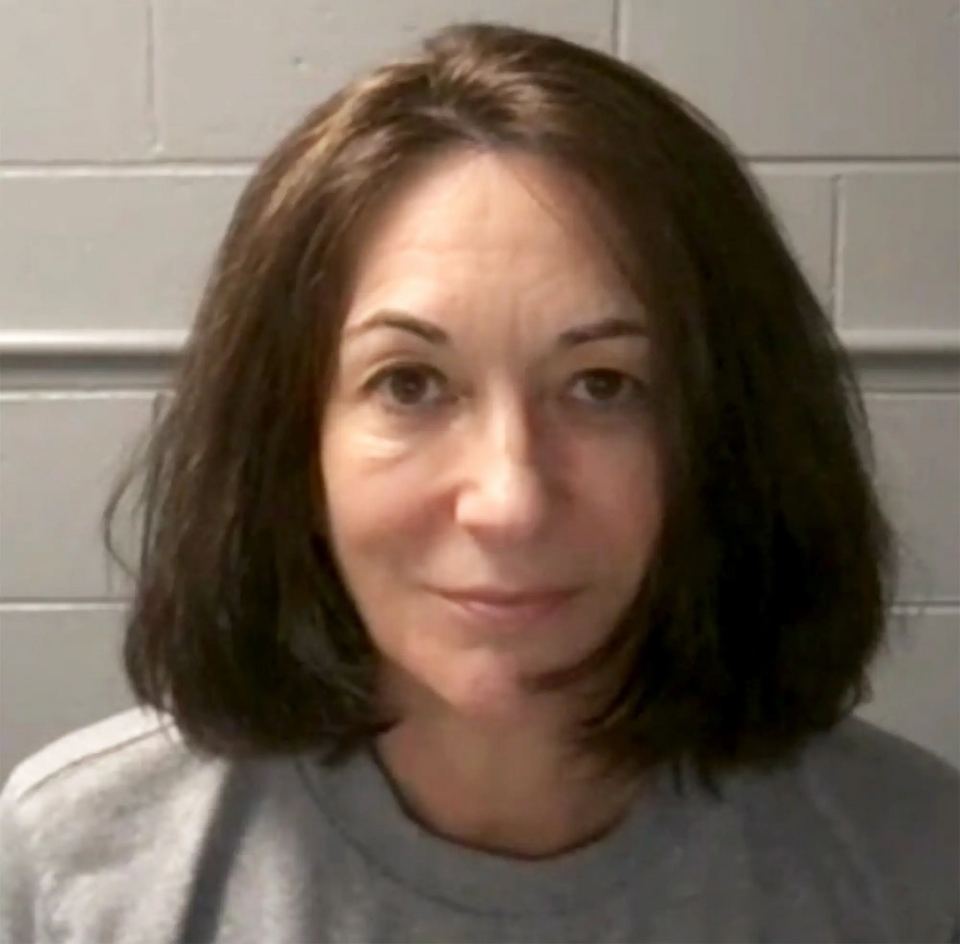
The Daughter of Robert Maxwell
To understand Ghislaine Maxwell, it is necessary to understand her father. Robert Maxwell — born Jan Ludvík Hoch in 1923 in a small village in what is now Ukraine, then part of the Austro-Hungarian Empire — was one of the most extraordinary and sinister figures in twentieth-century British public life. A Holocaust survivor who lost most of his family to the Nazis and rebuilt himself from nothing into a media magnate and Member of Parliament, Maxwell was also, by multiple credible accounts and by the subsequent financial forensics of his estate, a fraudster, a suspected intelligence asset for multiple governments, and a man who spent decades deceiving the people around him about the most fundamental aspects of his character and finances.
Robert Maxwell was found floating in the Atlantic Ocean near his yacht on November 5, 1991. He was 68 years old. The circumstances of his death — whether he fell, jumped, or was pushed — have never been officially resolved. What was resolved in the months after his death was the scale of his financial fraud: approximately £440 million had been stolen from the pension funds of his employees, leaving thousands of workers facing retirement without the funds they had been promised. His media empire, which included the Mirror Group, collapsed into insolvency.
Ghislaine Maxwell, the youngest and reportedly favorite of Robert Maxwell's nine children, was born in December 1961 and educated at Marlborough College and Balliol College, Oxford, where she read modern history. She had grown up in extraordinary privilege — private aircraft, palatial homes, social access to heads of state — privilege that evaporated with her father's death. His fraud not only eliminated her inheritance; it exposed the family to public disgrace, legal proceedings, and the systematic unraveling of everything she had been raised to assume was secure.
The Role She Played
In the years after her father's death, Maxwell relocated to New York, where she had known Jeffrey Epstein through her father's social network. Their relationship deepened from acquaintance to something more integral. Epstein provided her with financial support, residences, and access to the elite social world she had been raised in and feared losing. In exchange, Maxwell provided something essential to what Epstein was building: social legitimacy, a network inherited from her family's decades at the intersection of media, politics, and financial power, and — centrally — a talent for identifying and cultivating young women.
Federal prosecutors at Maxwell's 2021 trial described a systematic grooming operation in which Maxwell was not merely a facilitator but an active, directive participant. She recruited young women — often by presenting herself as a wealthy, glamorous mentor who could offer modeling opportunities, scholarships, travel, or social advancement. She developed personal relationships with potential victims before introducing any sexual demands, normalizing a world of gifts, attention, and access that made Epstein's eventual sexual demands seem, in the distorted environment she had created, like the price of admission to something extraordinary.
Prosecutors proved, through the testimony of four women who took the stand at trial, that Maxwell was present at and participated directly in sexual abuse. She was not a passive facilitator or an unwitting enabler. She groomed. She accompanied. She participated. And then she enforced the silence that followed — through financial settlements, through implicit threats, and through the social power that came with being someone who could make life very difficult for a young woman with few resources and, in some cases, uncertain immigration status.
What the Trial Proved
Maxwell's trial before Judge Alison Nathan in the Southern District of New York began November 29, 2021. The government presented 28 witnesses, including the four women who described their victimization directly: Jane, Kate, Annie Farmer, and Carolyn. The trial lasted approximately three weeks, and the jury deliberated for six days before returning its verdict on December 29, 2021.
The jury found Maxwell guilty on five of six counts. She was acquitted on one count of enticement of a minor to travel with intent to engage in illegal sexual activity. She was convicted of: conspiracy to entice a minor to travel to engage in illegal sexual activity; enticement of a minor to travel to engage in illegal sexual activity; conspiracy to transport a minor with intent to engage in criminal sexual activity; transporting a minor with intent to engage in criminal sexual activity; and sex trafficking of a minor. On June 28, 2022, Judge Nathan sentenced her to 20 years in federal prison. The sentence was at the low end of the guideline range, a fact that several victims and their advocates noted with disappointment.
The Cooperation That Did Not Come
Throughout the legal proceedings, from her July 2020 arrest through her sentencing in June 2022, the most urgent public question about Maxwell was whether she would cooperate with prosecutors and provide information about others in Epstein's network. She did not. Her attorneys engaged in discussions with prosecutors about cooperation at various points, but no agreement was reached. What she told prosecutors in those discussions, and why no deal was reached, remains unknown from the public record.
In a 2021 jailhouse interview with the Daily Mail — conducted from the Metropolitan Detention Center in Brooklyn before her trial — Maxwell stated: "I have no information on anyone. People are asking me, 'What about this person? What about that person?' I have nothing to give them." This statement, offered to a tabloid rather than in a legal proceeding, was not under oath and has been viewed skeptically by investigators and victims' advocates who are familiar with the evidence of Maxwell's centrality to Epstein's operation.
The terms of any cooperation agreement would have required Maxwell to provide testimony about individuals beyond herself and Epstein. The logical candidates would be the clients — the men whom she and Epstein trafficked victims to — as well as anyone who provided institutional protection, legal facilitation, or financial support to the operation over its decades of activity. The absence of that cooperation has been the single most consequential gap in the post-Maxwell prosecution landscape.
Prince Andrew and the Named Participants
Virginia Giuffre — one of the most prominent of Epstein's victims, who fought for years through the legal system to force disclosure of records and to hold participants accountable — alleged in sworn depositions that she was trafficked by Epstein and Maxwell to Prince Andrew, Duke of York, on multiple occasions when she was 17 years old. The depositions, filed in civil proceedings in the Southern District of New York, are part of the public legal record. A photograph, whose authenticity Prince Andrew disputed and whose disputed status was found by independent experts to be authentic, showed Andrew with his arm around Giuffre's waist, with Maxwell visible in the background.
Andrew gave an interview to BBC Newsnight in November 2019 in which he denied all knowledge of Giuffre and offered, among other things, an alibi based on his claimed inability to sweat — a medical condition he said he had developed following a deployment in the Falklands War — and a specific recollection of being at a Pizza Express in Woking on the night in question. The interview was widely regarded, including by royal commentators, as damaging rather than exculpatory. Andrew settled Virginia Giuffre's civil lawsuit against him in February 2022 for a sum widely reported to be in excess of £12 million, without admitting liability.
The International Dimension
One aspect of Maxwell's background that has received significant attention from investigators and commentators is the question of her possible connections to intelligence agencies — a question that her father's history makes less easily dismissable than it might otherwise be. Robert Maxwell was, by multiple credible accounts and by the admission of Israeli intelligence figures in memoirs published after his death, an asset or operative of the Mossad. Victor Ostrovsky, a former Mossad officer, wrote in his memoir that Maxwell had been used to distribute Israeli intelligence through his media network.
Whether Ghislaine Maxwell had any formal or informal relationship with any intelligence agency is not established in the public record. What is established is that her operation, at its height, was gathering compromising material on some of the most powerful men in the world. The convergence of that activity with the methods of state intelligence services — cultivation, documentation, leverage — has been noted by former intelligence professionals including Robert Baer, who described Epstein's operation publicly as bearing "the hallmarks of an intelligence gathering operation." These observations do not constitute proof. They constitute, in a case where so much remains classified or sealed, a legitimate analytical framework.
What the Silence Costs
Ghislaine Maxwell is 63 years old. Her 20-year sentence, with standard good-behavior reductions, would make her eligible for release sometime in the late 2030s, when she would be in her mid-to-late seventies. In the years between her conviction and that date — assuming the sentence is served in full — the men who were named in the records she has personal knowledge of will continue to benefit from her silence. Some will die. Some will retire from public life. The passage of time is itself a form of accountability avoidance, and Maxwell's calculation, whatever it is, appears to have factored in the value of that passage.