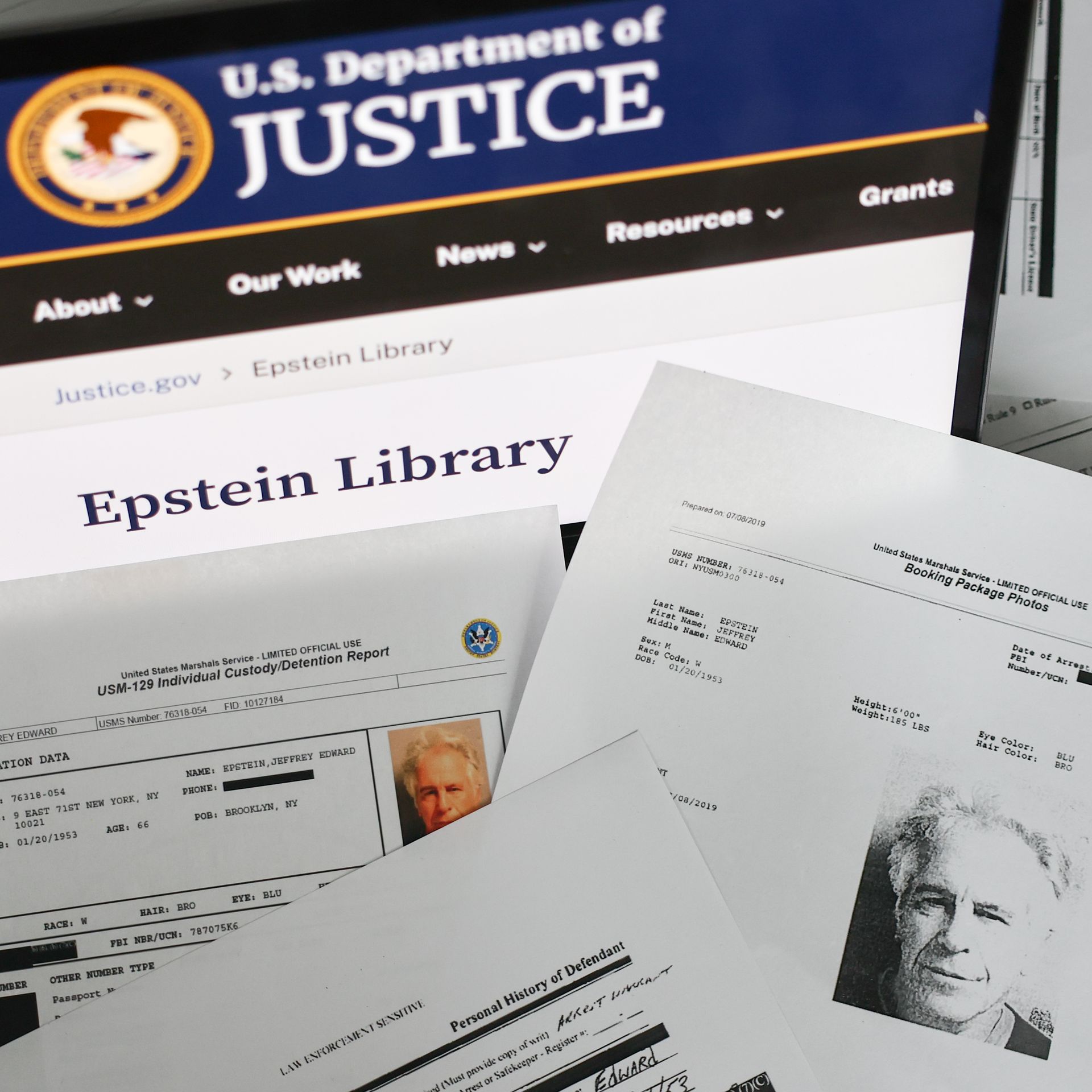
Federal Judge Orders DOJ to Unseal Epstein Files or Justify Redactions by July 2 Deadline
A landmark court order has set a ticking clock for the Justice Department — release the truth about Jeffrey Epstein's network, or publicly explain why the American people cannot see it.
The Order That Shook Washington
In a ruling that sent shockwaves through Washington on Thursday, U.S. District Judge Emmet G. Sullivan ordered the Department of Justice to release additional unredacted Jeffrey Epstein records — or submit a detailed written explanation by July 2 for why those materials must remain hidden from the public.
The order, issued in the case Phang v. Blanche, represents one of the most significant legal challenges yet to the government's handling of millions of pages of documents tied to the late convicted sex offender. Sullivan issued a preliminary injunction siding with independent journalist and attorney Katie Phang, who sued Acting Attorney General Todd Blanche in April, alleging that the DOJ had improperly redacted and withheld documents that Congress explicitly required to be made public under the Epstein Files Transparency Act.
The Justice Department, for its part, wasted no time declaring it would fight the ruling. A DOJ spokesperson told CBS News the agency plans to appeal, calling Sullivan's interpretation "perverse" and accusing the judge of being focused on "driving misleading headlines."
The Law at the Heart of the Fight
To understand the significance of this ruling, it is essential to understand the law it centers on: the Epstein Files Transparency Act, Public Law 119-38, signed by President Trump on November 19, 2025, following a near-unanimous bipartisan vote in Congress.
The law was sweeping in its mandate. It directed the attorney general to release all unclassified Department of Justice records related to Epstein — going significantly further than what would ordinarily be required under the Freedom of Information Act. The law did carve out limited exceptions, allowing the government to withhold victims' personal information and material that could jeopardize an active federal investigation. Critically, it required the government to provide written justifications for any information it chose to keep sealed.
Following the law's passage, the DOJ began releasing documents at a substantial scale. By early 2026, the department had released more than 3.5 million pages, along with over 2,000 videos and 180,000 images. Officials acknowledged the total number of potentially responsive pages could be as high as six million, claiming the unreleased remainder consisted largely of duplicate files, unrelated materials, or records protected by legal privilege.
For many — including survivors, their advocates, and journalists — that explanation was never satisfactory.
Who Brought the Lawsuit?
The person who cracked this legal door open is Katie Phang, an attorney, media legal analyst, and independent journalist who has covered the Epstein investigation extensively on YouTube and other platforms. Phang filed her lawsuit in April 2026, arguing that the DOJ's releases, while voluminous in page count, were riddled with unauthorized redactions — black bars that she contended Congress never permitted the department to draw.
Judge Sullivan agreed. He found that Phang had proper legal standing to pursue her claims under the Administrative Procedure Act, and that she had identified concrete, personal harm resulting from the DOJ's withholdings — specifically, that the redactions had prevented her from publishing certain investigative stories.
Sullivan also rejected the DOJ's motion to dismiss the case outright. The department had argued that Phang lacked standing, that the Epstein Files Transparency Act created no private right of legal action, and that FOIA already gave her adequate legal remedies. The judge found none of those arguments convincing.
Phang's attorney, Brendan Ballou of the Public Integrity Project, was direct in his reaction to the ruling: "The government thought that it could ignore its own law and blow off a judge's order, all for the sake of protecting the very powerful and the very rich. It didn't work, and now the public will finally get transparency around Jeffrey Epstein and his network."
What Exactly Was Redacted? Inside the Documents
The ruling is not abstract. Sullivan's 48-page memorandum opinion zeroed in on specific materials that the judge concluded the DOJ had improperly withheld or redacted, and the details are striking.
Eight Emails with Hidden Identities
Among the materials covered by the order are eight email exchanges involving Epstein in which either the sender or the recipient — or both — had been completely blacked out. One of the most disturbing involves an email in which Epstein reportedly wrote that he "loved" a torture video he had watched. The identity of the recipient of that email was concealed by the DOJ. During litigation, Acting AG Todd Blanche suggested the recipient was a wealthy Middle Eastern businessman, Sultan Ahmed bin Sulayem, but the redaction has prevented any independent confirmation or further investigation.
Other emails covered by the order involve discussions of the recruiting of young women. Among them is a 2015 message in which Epstein reportedly described girls aged 14 to 15 in sexually explicit terms — with the identities of those he was corresponding with still hidden behind government redactions.
A Draft Indictment with Missing Co-Conspirators
Sullivan's order also covers a 2007 draft federal indictment of Epstein that was never filed. In that document, the names of potential co-conspirators had been redacted — meaning that for nearly two decades, the identities of individuals the government once considered charging alongside Epstein have been shielded from public view. A 2019 email also referencing alleged co-conspirators was similarly redacted.
The question of who those co-conspirators are has been at the heart of public demand for Epstein transparency since his arrest and death in 2019. The draft indictment, in particular, is seen as a document that could name high-profile individuals who evaded prosecution.
FBI Interview Notes and the Trump Allegations
Perhaps the most politically explosive element of the ruling involves FBI interview notes connected to a woman who alleged that Epstein introduced her to President Donald Trump in the 1980s, when she was approximately 13 years old, and that Trump then sexually assaulted her. The DOJ had released summaries of the FBI's interviews with the woman, but not the underlying notes themselves.
Sullivan ordered the Justice Department to either release those original interview notes or explain why they cannot be disclosed. Importantly, the FBI reportedly interviewed the woman four times and found her to be credible, though the allegations have never been proven or verified and Trump has denied any wrongdoing.
The Justice Department had acknowledged the existence of around 36 items that mention President Trump, but argued they were not subject to release. The court's order challenges that position directly.
A Required Redaction Log
Beyond the specific documents, Sullivan also ordered the DOJ to release a comprehensive log listing every redaction it has made across all the Epstein files it has published — something the Epstein Files Transparency Act itself required but which the department had not produced.
The DOJ Pushback: Victims, Privilege, and an Appeal
The Justice Department's response has been a combination of legal defiance and a public argument that its redactions were protective, not concealing.
A department spokesperson pushed back sharply on the ruling, stating that "the Acting Attorney General has not conceded anything," and accusing Judge Sullivan of issuing "a perverse interpretation" aimed at generating misleading coverage. The spokesperson added that "this judge is suggesting DOJ violate the law by un-redacting victim names, who as the Department has always explained, sadly became co-conspirators."
That argument cuts to the most genuinely complicated dimension of the case. Many of Epstein's victims were also, in some instances, recruited to participate in the abuse of other minors — a dynamic that the DOJ says makes some redactions necessary to protect those individuals' privacy. Acting AG Todd Blanche has stated repeatedly that the department has complied with the law, and has separately acknowledged that millions of additional pages have been withheld because officials deem them duplicates, unrelated to Epstein, or covered by privilege.
Critics, however, argue that the department is using victim-protection as a shield to also conceal the identities of wealthy and powerful men who have never faced accountability. The very structure of the legal fight — in which the government resisted even providing a log of what it has redacted — has deepened skepticism about its motives.
The DOJ has confirmed it intends to appeal Sullivan's ruling, a move that could delay or ultimately prevent some or all of the ordered disclosures.
Judge Sullivan: A Familiar Name in High-Stakes Cases
The judge at the center of this ruling, U.S. District Judge Emmet G. Sullivan, is no stranger to politically charged legal battles. Appointed by President Clinton, Sullivan has previously presided over some of the most contested cases touching the Trump orbit. Most notably, he oversaw the criminal case of former National Security Advisor Michael Flynn, during which he challenged the Trump Justice Department's extraordinary move to drop charges after Flynn had already pleaded guilty. That case drew sharp criticism from Trump allies and made Sullivan a recognizable name in Washington's judicial landscape.
His decision to grant a preliminary injunction in this case — finding that Phang stood a strong chance of success on the merits — signals that the court views the DOJ's conduct as likely in violation of the law Congress passed and the president himself signed.
What Happens Next?
The immediate deadline is July 2. By that date, the Justice Department must either hand over the unredacted materials Sullivan identified, or file detailed written justifications — document by document — for why each item must remain sealed.
If the DOJ appeals and seeks a stay of the order, it would need to convince a higher court to pause Sullivan's ruling before the deadline, which adds yet another layer of legal complexity to an already sprawling saga. If the appeal is unsuccessful and the department defies the court's order, it would trigger a constitutional standoff with significant political ramifications.
For transparency advocates, survivors of Epstein's abuse, and the press, the clock is now running. After years of partial releases, bureaucratic resistance, and heavily censored documents, a court has drawn a hard line: the law means what it says.
The Bigger Picture: Accountability Deferred
The Epstein case has never truly closed, even after his death in a Manhattan jail cell in August 2019. His British socialite associate Ghislaine Maxwell was convicted in 2021 of sex trafficking and is currently serving a 20-year prison sentence. But the network of powerful men who allegedly participated in or enabled Epstein's abuse — and whose names have reportedly appeared in flight logs, contact books, and investigative files — has largely remained unnamed and uncharged.
For many of Epstein's survivors and their advocates, the fight over these documents is not merely about historical record-keeping. It is about whether the justice system is capable of holding the powerful accountable, or whether government institutions will continue to protect those at the top of the social hierarchy — even when a law explicitly passed to prevent that protection is on the books.
The July 2 deadline may not resolve that question. But it will force the DOJ to either show what it has been hiding — or tell the public, in writing, exactly why it refuses to do so. Either way, the American public is entitled to an answer.