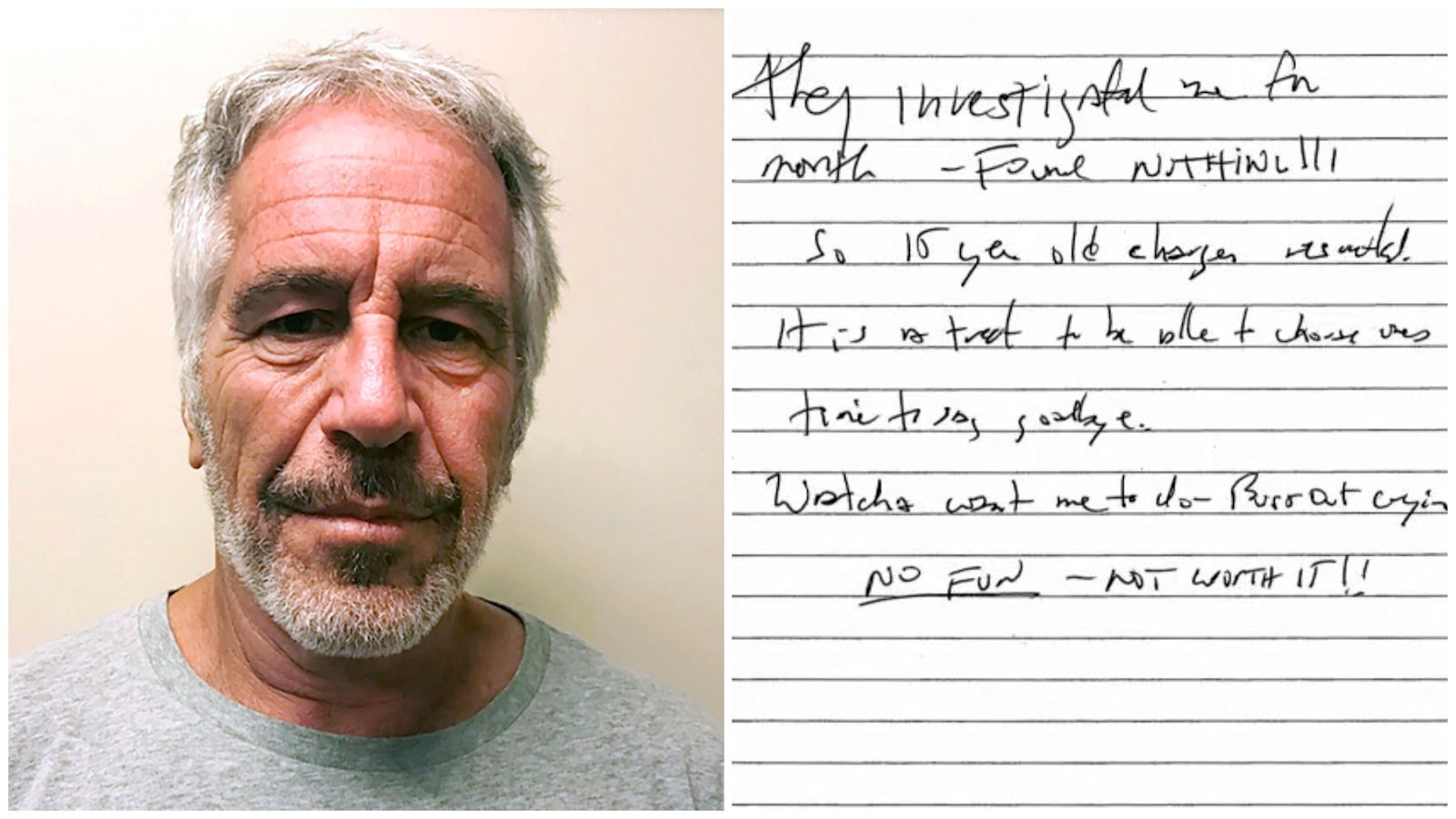
Among the many sealed documents in the federal court proceedings surrounding Jeffrey Epstein, one has taken on particular significance: a note, discovered by his cellmate in the aftermath of what was initially reported as a suicide attempt on July 23, 2019, that may contain Epstein's own account of what was happening to him and what he feared.
The New York Times reported this week that the note exists, that it has remained sealed in the court record, and that its contents are unknown to the public and to most of the individuals involved in the litigation surrounding Epstein's estate and his victims' claims. The report has renewed calls from survivors, their attorneys, and members of Congress for the document to be unsealed.
The Timeline Around the Note
To understand the significance of this document, it is necessary to reconstruct the sequence of events in July and August of 2019 with precision.
Epstein was arrested on July 6, 2019 and brought to the Metropolitan Correctional Center in New York. On July 23, he was found in his cell in a semi-conscious state with marks on his neck. The Bureau of Prisons initially classified the incident as a possible suicide attempt. His cellmate at the time, Nicholas Tartaglione, a former police officer awaiting trial on murder charges, told investigators he discovered Epstein and called for help.
It was in the aftermath of this July 23 incident that the note in question was reportedly found. The exact circumstances of its discovery — who found it, where it was located, and how it came to be sealed in the court record — have not been fully reported. What the Times' reporting establishes is that the document was entered into the court file and has remained sealed since.
On August 10, 2019, Epstein was found dead in his cell. He had been removed from suicide watch. His two assigned guards were both asleep and had falsified their monitoring logs, according to federal investigators. The official cause of death was ruled suicide by hanging. The circumstances of his death have been disputed by his estate, by some forensic experts, and by numerous public figures who have suggested the official account is incomplete.
What the Note Might Contain
No one outside a small circle of investigators and legal officials has reportedly seen the note. Speculation about its contents is therefore precisely that — speculation. But the context in which it was written is significant.
If it was written in late July 2019, Epstein had been in federal custody for approximately two weeks. He had seen the charges against him, understood that the government was pursuing him aggressively in ways that the 2008 agreement had led him to believe would never happen, and was facing the prospect of serious prison time for the first time. He had access to counsel. He was reportedly frightened.
What a man in that position would write — who he might name, what he might claim about his own culpability or the culpability of others, what he might say about threats he feared or deals he hoped to make — is the subject of obvious interest to investigators, to survivors, and to the public.
Attorneys for Epstein's victims have argued in filings that the sealed documents in his case, including any communications he made while in custody, are directly relevant to the claims of his estate and to the ongoing civil proceedings. They have sought access to sealed materials repeatedly. Those motions have largely been denied.
The Sealing Question
There is a routine legal logic to sealing documents in active criminal proceedings — protecting the integrity of investigations, shielding witnesses, preserving the rights of defendants. But Epstein is dead. The criminal case against him was terminated by his death. The reasons that typically justify sealing court documents have substantially eroded in the years since August 2019.
What remains is a set of interests that continue to push toward non-disclosure. If the note names individuals who have not been charged, their attorneys would argue strenuously against its release. If it contains statements that contradict the official account of his death, those with an interest in maintaining that account would resist disclosure. If it discusses relationships with living powerful individuals in ways that are damaging, those individuals would seek to keep it sealed.
The question of who has standing to seek unsealing — survivors, media organizations, congressional investigators — is one that courts have not yet resolved in this specific context. The House Oversight Committee has requested access to sealed Epstein documents as part of its investigation. Whether courts will grant that request, and whether executive branch agencies will comply if courts do, remains to be seen.
The Broader Pattern of Concealment
The sealed suicide note sits within a broader pattern of official concealment that has defined the Epstein case from its earliest stages. The 2008 non-prosecution agreement was kept secret for years after it was signed. The identities of co-conspirators protected by that agreement were never disclosed. The full client list from Epstein's operations has never been made public. FBI files related to the investigation have been released only partially and in heavily redacted form.
Each element of that pattern has a legal justification. Taken together, they describe a system that has consistently prioritized the interests of the powerful over the rights of victims and the public's interest in knowing what happened.
A sealed note from a dead man — whatever it contains — is one more piece of a puzzle that the official record has been constructed, piece by piece, to keep incomplete. The renewed reporting about its existence is a reminder that the puzzle is still being worked, and that some of those pieces, despite years of effort to keep them hidden, have a way of eventually surfacing.