
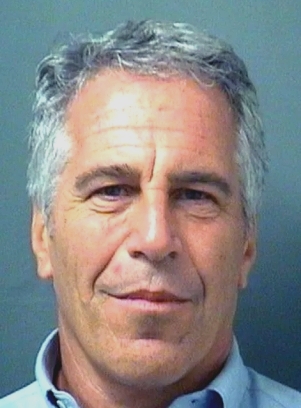
The Morning of August 10, 2019
At approximately 6:30 in the morning on August 10, 2019, a correctional officer at the Metropolitan Correctional Center in Lower Manhattan found Jeffrey Epstein unresponsive in his cell. He was transported to New York Presbyterian Hospital, where he was pronounced dead at 7:36 a.m. He was 66 years old. He had been awaiting trial on federal sex trafficking charges that could have resulted in a 45-year prison sentence — charges filed by prosecutors in the Southern District of New York just 37 days earlier, on July 6, 2019.
The New York City Office of the Chief Medical Examiner performed an autopsy and, on August 16, 2019, ruled Epstein's death a suicide by hanging. That ruling has never been formally revised. It has also never been fully accepted — not by Epstein's family, not by the forensic pathologist retained by his estate, not by a significant portion of the investigative community, and not by the independent forensic experts who reviewed the available evidence. The gap between the official narrative and the available physical evidence is the central, unresolved question of the Epstein case.
The Physical Evidence: A Disputed Autopsy
Dr. Michael Baden is one of the most experienced forensic pathologists in the United States. The former chief medical examiner of New York City, he has conducted or supervised more than 20,000 autopsies over a career spanning six decades and has served as a forensic consultant in some of the most consequential legal cases in American history, including investigations into the assassinations of John F. Kennedy and Martin Luther King Jr. He was retained by Epstein's brother Mark to observe the official autopsy performed by the New York City Medical Examiner's office.
Baden's findings, which he presented publicly in multiple media appearances beginning in October 2019 and detailed in subsequent sworn testimony, were unambiguous in his professional assessment: the pattern of injuries he observed was more consistent with homicidal strangulation than with suicide by hanging. Specifically, Baden identified fractures of the left and right thyroid cartilage and the left hyoid bone — a pattern he described as "extremely unusual" in suicidal hanging, and one he associated in his extensive forensic experience more commonly with manual strangulation or ligature strangulation applied from the front.
"In my experience, fractures of the hyoid bone and the thyroid cartilage, particularly bilateral fractures of the thyroid cartilage, are seen in homicidal strangulation," Baden stated in a Fox News interview on October 30, 2019. "I've not seen them in suicidal hanging." Baden emphasized that this was his professional opinion based on the physical findings, and that the case required further investigation before any definitive conclusion could be reached.
Dr. Barbara Sampson, the New York City Chief Medical Examiner who performed the official autopsy, acknowledged the hyoid fractures but maintained her suicide ruling, stating that the totality of the evidence supported that conclusion and that such fractures, while more commonly associated with homicide, can occur in suicidal hanging — particularly in older individuals. The medical examiner's office released a statement noting that the ruling was reached after "careful review" of all available evidence. The conflict between Baden's findings and Sampson's conclusions was never resolved by any independent forensic review or official re-examination.
The Anatomy of Institutional Failure
The physical evidence dispute is troubling in isolation. Its significance is compounded by a cascade of institutional failures at the Metropolitan Correctional Center that were documented in exhaustive detail by a Department of Justice Office of Inspector General investigation published in November 2021. The OIG report found a series of policy violations, management failures, and decisions that, taken individually, might be explicable and taken together strain any innocent interpretation.
The Suicide Watch Removal: On July 23, 2019, Epstein was found unconscious in his cell with marks on his neck. He was placed on suicide watch — the Bureau of Prisons protocol for inmates at elevated risk of self-harm. On July 29, 2019, less than a week later, he was removed from suicide watch. Bureau of Prisons policy required that an inmate removed from suicide watch be placed in a "step-down" program with enhanced monitoring. This was not done. Epstein was returned to his cell in the Special Housing Unit without the required follow-up observation protocol.
The Cellmate Transfer: On August 9, 2019 — the night before Epstein's death — his cellmate, Nicholas Tartaglione, a former police officer awaiting sentencing on murder charges, was transferred out of the cell. The transfer left Epstein alone in a single-occupancy cell for the night, in violation of Bureau of Prisons policy that specifically required high-profile or at-risk inmates to have a cellmate. The circumstances and authorization for Tartaglione's transfer have never been fully accounted for in any public document.
The Falsified Logs: Two correctional officers assigned to check on Epstein every 30 minutes failed to conduct those checks for approximately three hours before his death was discovered. The officers — Tova Noel and Michael Thomas — subsequently falsified their log records to indicate that the required checks had been performed. Both were charged with falsifying prison records and making false statements. In May 2021, prosecutors moved to drop the charges under a deferred prosecution agreement, citing the officers' completion of required community service. The charges were dismissed. No other correctional officer or prison official was charged with any crime in connection with Epstein's death.
The Camera Failure: Surveillance cameras positioned outside Epstein's cell on the Special Housing Unit tier malfunctioned on the night of August 9-10 and failed to record. Bureau of Prisons officials confirmed the failure but have not provided a full explanation of its cause. A separate camera failure had also been documented during an earlier incident at a different facility when Epstein was temporarily held following his July 23 incident. Two significant camera failures, in connection with the same inmate, at two different facilities, within three weeks of each other — this coincidence has never received an authoritative explanation.
Who Benefits from the Absence of Trial
Epstein's death on August 10, 2019 eliminated the possibility of a federal trial at which he would have faced examination about the full scope of his trafficking network. Under the Federal Rules of Criminal Procedure, a trial would have required witnesses to testify, documentary evidence to be presented, and — critically — Epstein himself to be present in a courtroom where his victims, attorneys, and potentially a jury would have heard the evidence against him in open proceeding.
More significantly, in any negotiated plea agreement or cooperation arrangement, Epstein's full account of his network — the men he trafficked to, the financial structures he used, the institutional protections he enjoyed — would have been a primary prosecutorial objective. The Southern District of New York prosecutors who filed the July 2019 charges had specific interest in identifying Epstein's co-conspirators beyond Ghislaine Maxwell, who was not arrested until 2020.
The list of individuals who benefited from the absence of Epstein's testimony under oath is, by definition, coextensive with the list of individuals who had reason to fear what he might say. That list, by all available accounts and by the partial evidence of flight logs, depositions, and civil filings, includes individuals at the highest levels of political, financial, academic, and social life in the United States, the United Kingdom, and elsewhere.
The DOJ Inspector General Report
The November 2021 report by the Department of Justice Office of Inspector General was, by the standards of such institutional self-examinations, unusually direct in its findings. It identified multiple violations of Bureau of Prisons policy, documented the failures described above in detail, and concluded that the MCC's management of Epstein was characterized by negligence at multiple levels. It stopped well short of attributing criminal responsibility for Epstein's death to any person or group of persons, and it did not address the question of whether any external party had any role in the outcome.
A separate FBI investigation into the circumstances of Epstein's death was reportedly opened following his death. Its findings have not been made public. No case number has been released. No official has confirmed or denied its current status. Congressional requests for information about the investigation have been met with silence or general references to ongoing matters.
Congressional Response and Its Limits
The circumstances of Epstein's death have been the subject of repeated congressional attention since August 2019. Members of both chambers and both parties have called for investigations, demanded documents, and expressed public skepticism of the suicide ruling. Attorney General William Barr, who stated in August 2019 that he had personally reviewed the circumstances of Epstein's death and found "no indication" of foul play, subsequently acknowledged the failures documented by the OIG while maintaining confidence in the suicide conclusion.
Sen. Ben Sasse, Republican of Nebraska, said in a statement following Barr's review: "Every single person in the Justice Department — from the AG on down — should be angry, ashamed, and determined to figure out what the hell went wrong." The language was stronger than most official responses, but it, too, ultimately accepted the premise of institutional failure rather than intentional action. Whether that acceptance is warranted by the available evidence or whether it represents the outer boundary of what is politically possible to say in public about the death of Jeffrey Epstein remains an open question.
What Remains Unanswered
Years after Epstein's death, the most fundamental questions have not received authoritative answers. Who specifically authorized removing him from suicide watch? Who ordered the transfer of his cellmate on August 9? What caused both surveillance cameras to malfunction? Why were the charges against the guards ultimately dropped rather than prosecuted? What did the separate FBI investigation find, and why have its findings not been made public?
These questions are not the province of conspiracy theory. They have been raised by sitting members of Congress in both parties, by former federal prosecutors with direct knowledge of the case, by the attorneys representing Epstein's victims, and by one of the most respected forensic pathologists in the country. The standard for answering them is not certainty about what happened — that may never be achievable — but the basic transparency that the public interest in a case of this magnitude demands.