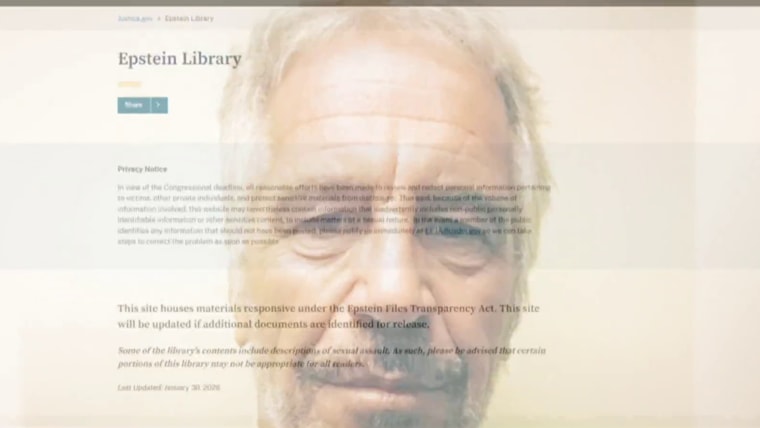
The United States Department of Justice has released more than three million pages of investigative materials related to Jeffrey Epstein in what is being described as the largest single disclosure of records in the history of the case. The release, which spans decades of federal, state, and local law enforcement activity, includes witness interview transcripts, surveillance logs, financial records, travel manifests, and internal communications that together paint the most detailed picture yet of how Epstein built, maintained, and protected his network of abuse.
For the survivors who have spent years fighting for this disclosure — through Freedom of Information Act litigation, congressional advocacy, and relentless public pressure — the release represents a long-deferred acknowledgment that the public has a right to know what the government knew, when it knew it, and what it chose to do or not do with that knowledge. For investigators, journalists, and researchers, the documents represent years of work ahead.
What the Files Contain
The three million-plus pages span a timeline stretching from the earliest known law enforcement contact with Epstein through the federal prosecution that ended with his death in custody in August 2019. The materials include records from multiple jurisdictions — Palm Beach County, the Southern District of New York, the Department of Homeland Security, and the FBI — reflecting the sprawling, multi-agency nature of an investigation that took far too long to produce meaningful accountability.
Among the most significant categories of documents are the financial records, which investigators believe hold the key to understanding both the true source of Epstein's wealth and the mechanism by which he maintained leverage over powerful figures. Epstein's fortune — estimated at somewhere between half a billion and two billion dollars, depending on the valuation method — has never been convincingly explained. He nominally worked as a financial manager for ultra-wealthy clients, but no credible account of his actual investment activities has ever emerged.
The travel records are equally significant. Epstein maintained a private aviation fleet that logged thousands of flights over decades. The passenger manifests for those flights — some of which have been released piecemeal through litigation, generating enormous public interest — are now available in far greater completeness. The names on those manifests, and the dates and destinations of the flights, provide a documentary record of who was where, when, in ways that sworn denials and carefully crafted public statements cannot easily contradict.
The Road to Disclosure
The release did not happen willingly or quickly. It is the product of years of litigation by survivors' advocacy groups, investigative journalists, and civil liberties organizations who argued that the public interest in transparency vastly outweighed any legitimate government interest in continued secrecy. The argument was straightforward: Epstein is dead. His primary known co-conspirator, Ghislaine Maxwell, is serving a 20-year federal prison sentence. The investigative equities that might once have justified withholding documents have largely expired.
What remained — and what produced the redactions that still pepper many of the released documents — was something more uncomfortable: the interest of powerful individuals in keeping their association with Epstein out of the public record. That interest, dressed up in the language of privacy rights and due process, has functioned as a brake on disclosure at every stage of this case. It is the same interest that produced the extraordinary 2008 non-prosecution agreement that allowed Epstein to serve 13 months in a county jail for crimes that should have resulted in decades of federal imprisonment.
The Significance for Ongoing Accountability
Three million pages is not a conclusion. It is raw material. The work of reading, analyzing, cross-referencing, and publishing the contents of these documents will take years and will require the sustained attention of journalists, researchers, and legal advocates who are willing to do the work without being deterred by the power and resources of those whose reputations are at stake.
What the release does is change the terms of the accountability conversation. For years, powerful figures associated with Epstein have been able to make denials — some specific, some evasive, some technically true but substantially misleading — that were difficult to contradict because the documentary record was not public. That is no longer entirely the case. The documents are there. The question now is what they say, who has the courage to report it, and whether the legal system has the will to follow the evidence wherever it leads.
The American Reveal is committed to covering this story for as long as it takes to get to the full truth. The survivors who endured Epstein's crimes deserve nothing less — and neither does a public that has been told, repeatedly, that accountability is coming.