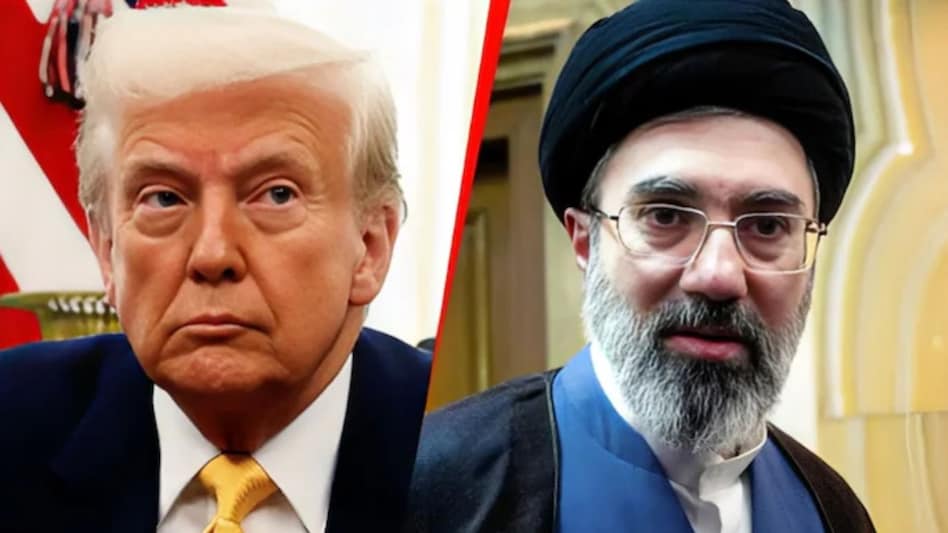
As of this morning, Jared Kushner and Steve Witkoff are sitting in Doha while Iran's technical delegation is also in the city, yet neither side will admit they're actually meeting—a surreal diplomatic standoff that perfectly captures how fragile the ceasefire between these two countries really is, with Trump claiming Iran requested talks and Tehran insisting nothing's been scheduled.
The Real Situation: Everyone's There, Nobody's Talking
Here's what's actually happening: Qatar's foreign ministry says US envoys Jared Kushner and Steve Witkoff are in Doha, but that there is no meeting currently scheduled with Iranian officials. This is the state of play as of this morning, June 30th.
Trump announced yesterday that Iran "requested a meeting" and it would happen today in Doha. But Iran's Foreign Ministry spokesperson Esmaeil Baghaei immediately flatly denied this. He said Tehran will not have any negotiation meetings with the American side in the coming days and that Iran's technical delegation heading to Qatar has "no relation" to the American presence. It's a carefully worded statement that's technically true while being fundamentally misleading—both delegations are literally in the same city at the same time.
The confusion isn't accidental. A senior Iranian official said there would be a meeting in Doha on Tuesday, but unlike previous technical talks between Iran and U.S. teams in Switzerland, the focus would be on managing the Strait of Hormuz and de-escalating tensions. So there IS supposed to be a meeting, it's just not being called a "meeting" officially. Another official with knowledge of the plans said technical teams from the U.S. and Iran are expected to meet separately with Qatari and Pakistani mediators on Wednesday.
In other words, both sides are playing semantic games. The Americans are there. The Iranians are there. But they're denying it because admitting it publicly might upset their domestic audiences or be seen as capitulating to the other side.
Why the Games Matter
This level of diplomatic theater is revealing. When two governments can't even admit they're negotiating, it tells you something about the pressure they're both under at home. For Trump, he needs to show he's winning—that Iran came to him. For Iran, admitting to talks with the Americans looks weak domestically, especially after months of rhetoric about standing firm.
But the games are also dangerous. The disagreement over whether the sides would even meet underscored the fragility of a June 17 accord to pause a conflict that has disrupted global oil flows and created a political headache for Trump. That June 17 framework agreement was supposed to be the breakthrough. Now, just two weeks later, both sides are striking each other and publicly denying they're in the same room.
The Weekend That Tested Everything
Over the weekend, the ceasefire nearly collapsed. On Saturday, Iran attacked a Panama-flagged oil tanker in the Strait of Hormuz. The US responded on Sunday with strikes on Iranian military targets. Iran then fired back at US bases in Kuwait and Bahrain. It was escalation wrapped in language about "restoring the ceasefire," which is just code for "we both know we're not fully done fighting."
Secretary of State Marco Rubio was scheduled to brief House lawmakers on the tentative agreement with Iran, which suggests the administration knows it has explaining to do to Congress. Some Republicans have been critical of Trump conducting a war without proper legislative authorization, so keeping lawmakers informed—even in a classified briefing—is damage control.
What They're Actually Fighting About
The core issue remains the Strait of Hormuz. Iran has sought leverage by flexing its control of the strait shared with neighboring Oman, saying it plans to charge fees to ships using the waterway and obstructing vessels that stray outside defined paths. That's Iran's playing card. They control the waterway and they know the global economy depends on it.
The June 17 framework agreement committed both sides to work out details on Iran's nuclear program, sanctions relief, and the long-term status of the strait. But the framework is vague. Both sides are interpreting it differently, and those different interpretations led directly to this past weekend's escalation.
The Oil Price Factor
Oil prices are rising after a weekend of back-and-forth strikes near the Strait of Hormuz. But not by as much as you'd think. Brent crude was up just 0.6%. US oil prices are up only around 0.8%. And oil remains below where it had traded before the war started. This is actually revealing about market confidence—or lack thereof. Markets don't believe the ceasefire is holding. They're pricing in more disruption.
The reason oil isn't spiking is that Traffic through the vital waterway is still highly sensitive to drone attacks and the presence of mines and is at a fraction of what it was before the US and Israel launched strikes on Iran in February. The market's already priced in a broken strait. So when the ceasefire wobbles, oil barely moves.
What Happens in the Next 48 Hours
If Kushner and Witkoff actually do sit down with Iranian officials—through mediators, in back channels, however they frame it—the conversation will be about implementation of that June 17 framework. How much sanctions relief? When does Iran get access to frozen assets? What happens to the nuclear program? And most crucially: who controls the Strait of Hormuz and under what rules?
Trump told reporters that the Doha meeting is "going to be perhaps important, perhaps not." That's the language of a negotiator who's not sure what he's walking into. He also maintained that America is "winning militarily" and repeated his red line that Iran must be stopped from producing nuclear weapons.
The real test isn't whether they meet. It's whether they can actually agree on something that neither side feels they've surrendered on. Right now, both delegations are in Doha playing pretend—which is better than shooting, but not by much.