The Bruise That Won't Fade: Why Questions About Trump's Health Keep Coming Back
The marks on his hands are real. The diagnosis is real. The White House says he's fine. So why won't the speculation stop?
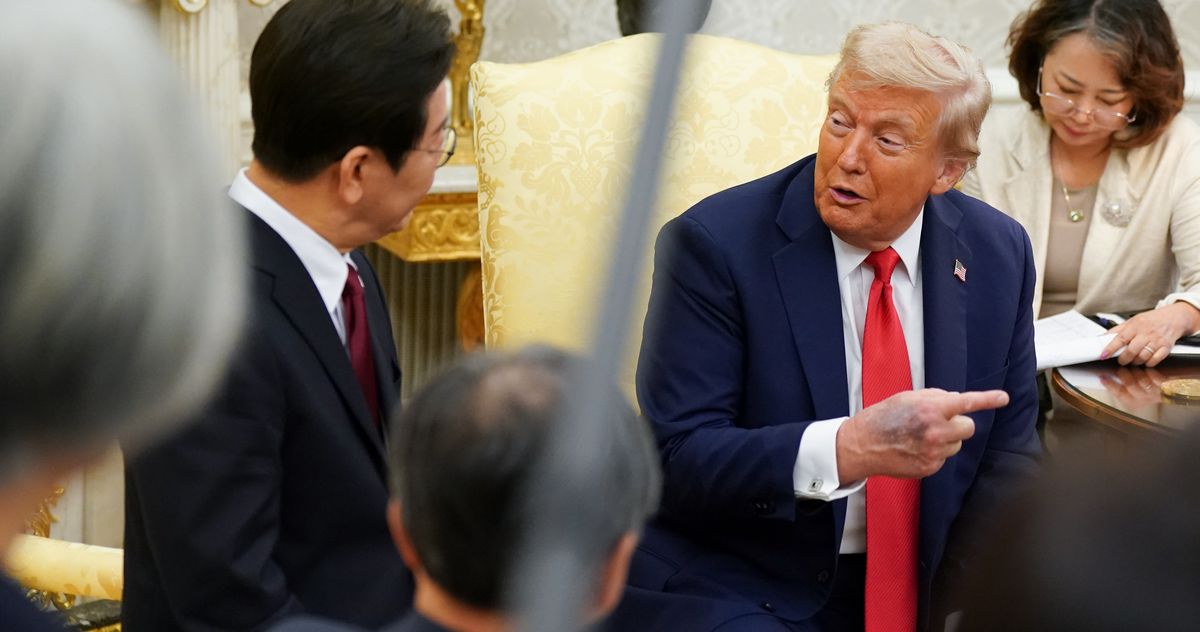
Every few weeks, the same cycle repeats. A photograph surfaces — Trump at a summit, a signing ceremony, an Oval Office meeting — and there it is again: a dark patch on the back of his hand, sometimes the right, sometimes the left, occasionally smoothed over with what looks like makeup. The internet lights up. The White House offers an explanation. And the questions, rather than settling, get louder.
At 79, Donald Trump is the oldest person ever to hold the office he occupies. That fact alone guarantees scrutiny of his health. But the persistence of the speculation isn't only about age — it's about the gap between what cameras keep capturing and what the administration keeps insisting.
What's Actually Been Confirmed
It's worth separating documented fact from online theory, because there is a real medical record here.
In July 2025, the White House confirmed that Trump had been diagnosed with chronic venous insufficiency, a condition in which the veins — primarily in the legs — struggle to circulate blood efficiently back to the heart. The president's physician, Sean Barbabella, described it as "benign and common," and it genuinely is: the condition is frequently found in older adults and is not, on its own, a cause for alarm. The diagnosis came after medical tests prompted by visible swelling in the president's legs over the summer of 2025.
The recurring hand bruising has a separate official explanation. The White House has attributed it to two things: Trump's habit of shaking an extraordinary number of hands, and his daily regimen of 325 milligrams of aspirin — a relatively high over-the-counter dose whose known side effects include easier bruising and bleeding. Trump has volunteered this explanation himself, telling reporters on multiple occasions that he takes aspirin for cardiovascular reasons and, in his characteristic phrasing, that he prefers "nice, thin blood" flowing through his heart.
The most recent assessment, released May 29, 2026, after an examination at Walter Reed, continued the pattern: the president, his physician wrote, "remains in excellent health, demonstrating strong cardiac, pulmonary, neurological, and overall physical function." The memo noted the leg swelling had actually improved compared with 2025 measurements, described the hand bruising as benign, and offered preventive advice on diet and physical activity ahead of his upcoming birthday.
On paper, in other words, the official story is consistent and reassuring.
So Why the Persistent Doubt?
The skepticism doesn't come from nowhere. It feeds on a handful of recurring details that the administration's explanations don't fully quiet.
The bruise keeps moving. For most of a year, the discoloration appeared on Trump's right hand, and "handshaking" was offered as the cause. Then, at the World Economic Forum in Davos in January 2026, a dark bruise appeared on his left hand — his non-dominant one. This time the White House offered a different account: press secretary Karoline Leavitt said he had clipped his hand on the corner of a signing table. Fact-checkers confirmed the photos were authentic and unedited. But a wandering bruise with shifting explanations is, predictably, the kind of thing that fuels rather than ends speculation.
The cover-ups are literal. Trump has repeatedly been photographed with bandages or what appears to be makeup applied over the back of his hand. Concealing a visible mark is not, by itself, evidence of anything sinister — plenty of people would do the same before a televised event. But for a public figure already facing health questions, the visible act of covering up reads, fairly or not, as symbolic.
The imaging raised eyebrows. Trump disclosed in October 2025 that he had undergone an MRI, and a December memo confirmed he'd had advanced imaging at Walter Reed. The White House framed it as purely preventive — to "identify issues early" and "confirm overall health" — and said the cardiovascular results were "perfectly normal," with no evidence of arterial narrowing or heart abnormality. Still, a sitting president volunteering that he's had an MRI, without initially specifying of what, invited exactly the questions it was presumably meant to head off.
The "excellent health" framing strains credulity for some. Independent commentators have pointed to the same examinations and drawn less flattering conclusions — noting a BMI nearing the clinical obesity threshold, and questioning whether the upbeat tone of the official memos tells the whole story. None of this amounts to proof of a hidden serious condition. But it widens the space between the administration's messaging and the interpretations circulating elsewhere.
The Real Story Is About Disclosure, Not Diagnosis
Here is the honest bottom line: there is no public evidence that Donald Trump is concealing a grave or terminal illness. The conditions that have been confirmed — venous insufficiency, bruising linked to aspirin — are, by the accounts of his physicians, manageable and common for a man his age. Anyone claiming to know otherwise is speculating beyond the available facts.
What is a legitimate story is the question of transparency. Presidential health has always sat in an uneasy place between personal privacy and public interest, and history is full of administrations that managed the optics of a leader's condition carefully. The Trump White House's approach — confident memos, shifting explanations for the bruising, visible concealment, and a press operation that sometimes declines to elaborate — keeps the subject alive precisely because it leaves room for interpretation.
The marks on his hands are real. The diagnosis is real. The reassurances are on the record. The reason the questions won't fade isn't that the public has proof of a cover-up — it's that, in the absence of fuller disclosure, the public is left to read the photographs for themselves.
This article is based on reporting and official statements from Reuters, CNN, People, Fox News, Snopes, Northeastern Global News, and the White House physician's published memos, current as of June 2026. It reflects the public record and does not assert any undisclosed medical diagnosis.