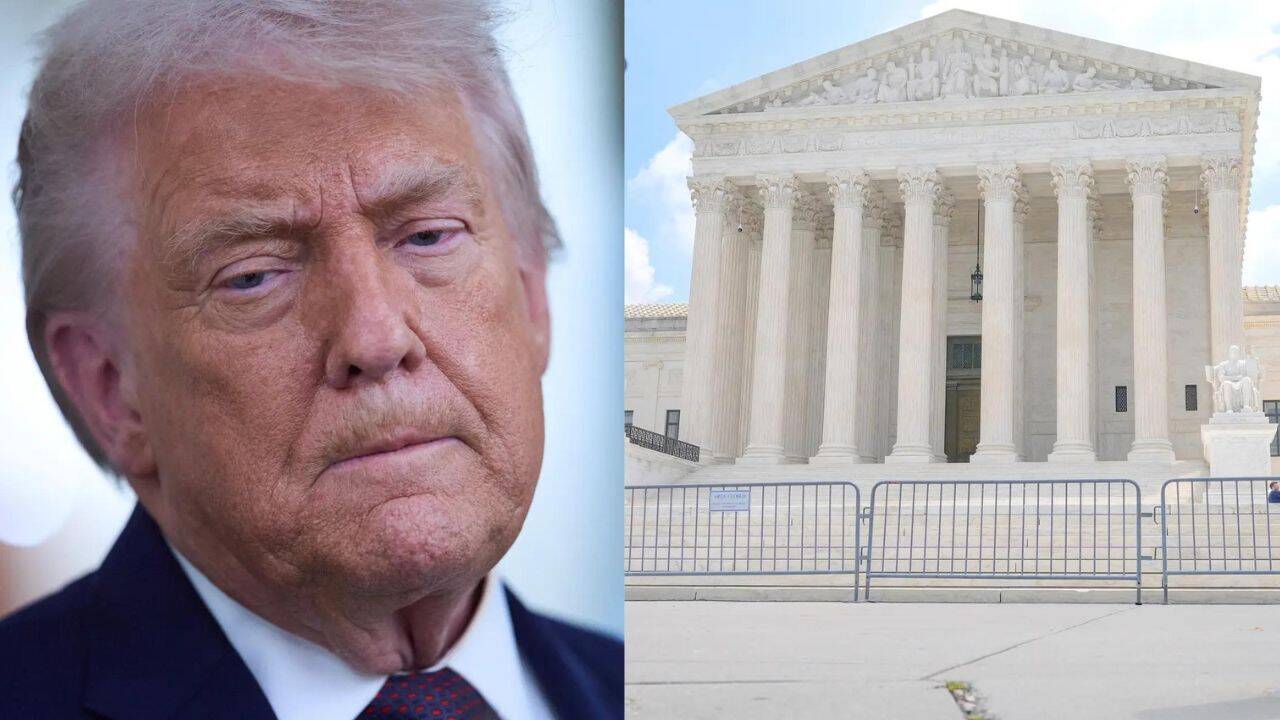
On Tuesday, the nation's highest court rejected Trump's push to gut birthright citizenship, keeping intact the century-and-a-half-old constitutional guarantee that virtually every child born on U.S. soil becomes an American citizen — regardless of their parents' immigration status. It's a direct rebuke of a policy Trump tried to implement on day one of his administration.
The Situation: A Conservative Court Sides Against the President
This is the part that stings for Trump. The Supreme Court isn't full of Trump-skeptics. He appointed three of the nine justices. Yet Roberts—a Chief Justice appointed by George W. Bush and someone Trump had previously complained about—sided firmly against the president on one of his signature policy priorities.
The decision firmly rejected the executive order that Trump issued on the first day of his second term. That order, signed on January 20, 2025, was sweeping in its ambition. It would restrict citizenship to babies of current American citizens or other lawful permanent residents that have established "domicile" in the U.S. The administration's argument was blunt: that birthright citizenship is a "scam" that has allowed wealthy adversaries to game the American system and that it unfairly burdens taxpayers.
In its 6-to-3 decision issued on June 30, 2026, the court struck down the president's 2025 executive order, which sought to strip citizenship from American children born to undocumented parents. That's hundreds of thousands of kids per year who would have been left in legal limbo.
What Roberts Actually Said
Chief Justice John Roberts wrote the court's 6-3 opinion, citing both the colonists' demands for the "rights of Englishmen" as well as the abolitionists lauding of the "ancient and universal" rule of citizenship by birth alone. Roberts grounded his opinion in history, meaning he wasn't just citing legal precedent—he was saying Trump's argument doesn't even match how Americans have thought about citizenship for centuries.
The legal foundation is the 14th Amendment, ratified in 1868. Roberts' opinion for the court pointed to the court's landmark ruling well over a century ago in the 1898 case of Wong Kim Ark, born in San Francisco in 1873 to Chinese immigrants. In that case, Wong Kim Ark had been denied re-entry to the U.S. after a trip to visit family in China, precisely because authorities claimed he wasn't a citizen. The Supreme Court told them they were wrong. If you're born here, you're a citizen. That's been settled law for 128 years.
The decision in the Wong Kim Ark case was so widely accepted that even in periods of great hostility to immigrants, the notion of birthright citizenship remained untouchable. During World War II, when the country was literally putting Japanese citizens in detention camps as enemy aliens, their newborn children were automatically granted American citizenship because they were born on U.S. soil. If the government accepted that principle while holding its enemies in camps, Trump's argument that it's somehow a loophole seems pretty thin.
The Dissenters Were Blunt
Not all the justices agreed. "The Court has made a serious mistake," Justice Samuel Alito wrote in one of three dissents by conservatives on the court. Justice Kavanaugh wrote separately, and Justice Thomas voiced his own objections. So there was real disagreement on the bench. But there wasn't enough disagreement to change the outcome.
What This Means
An estimated 255,000 children born every year to noncitizen parents would have lost legal status under Trump's order. That's a staggering number—and not just in terms of immigration policy. Those children would have effectively been born stateless, because they wouldn't automatically be citizens anywhere. That creates what legal experts call "a bureaucratic nightmare for older Americans" who would have no way to prove citizenship except through increasingly complex government determinations of their parents' status.
Trump's response was revealing. "The Supreme Court upheld Birthright Citizenship, which is too bad for our Country," Trump wrote in a Truth Social post reacting to the ruling. He didn't accept the decision gracefully. Instead, he immediately pivoted: "But we can easily make it up in Congress through Legislation, with the support of the President, that has now been determined during this process. No long and unwieldy Constitutional Amendment is necessary! Congress should start TODAY to work on ending expensive and unfair to our Country, Birthright Citizenship."
That's important. He's signaling that he won't let this go. A constitutional amendment requires a two-thirds vote in both chambers, which is nearly impossible in a polarized Congress. But regular legislation? That's a different game, especially if Republicans hold the House and Senate. Trump is telling Congress that he'll support an act of Congress to overturn the Supreme Court's constitutional interpretation through statutory law. Good luck with that legally, but he's making the political point clear.
The Historical Context
What Roberts emphasized is that the framers of the 14th Amendment deliberately chose broad language. They were reacting to slavery and the Jim Crow laws that followed, and they wanted to make sure the country couldn't go back to denying citizenship based on race or status. As she put it, the men who wrote the Fourteenth Amendment deliberately chose to confer automatic citizenship on the child, not the parent, the idea being that "in America we do not punish children for the sins of their fathers, but instead we wipe the slate clean. When you're born in this country, we're all American, all the same."
That's the actual philosophy behind birthright citizenship. It's not about loopholes. It's about the idea that being American isn't inherited—it's geographic. You're born here, you're one of us. Full stop.
What Happens Next
Trump's move to Congress is the political reality now. He can't win this in court, so he's signaling he'll try to win it in legislation. Whether Congress has the appetite for this fight is a different question, but Trump clearly isn't going to let birthright citizenship rest as settled law. The Supreme Court just told him the Constitution stands in his way. But the Constitution can theoretically be changed, even if it's extraordinarily difficult.
For now, though, hundreds of thousands of children born every year to immigrant parents remain protected. The Supreme Court, stacked with conservatives, has reaffirmed a principle that's been central to American identity for over 150 years. The loss stings for Trump, which is probably why he's already plotting his next move.