On the War's 100th Day, Israel and Iran Trade Fire Again — and the Region Holds Its Breath
June 8, 2026
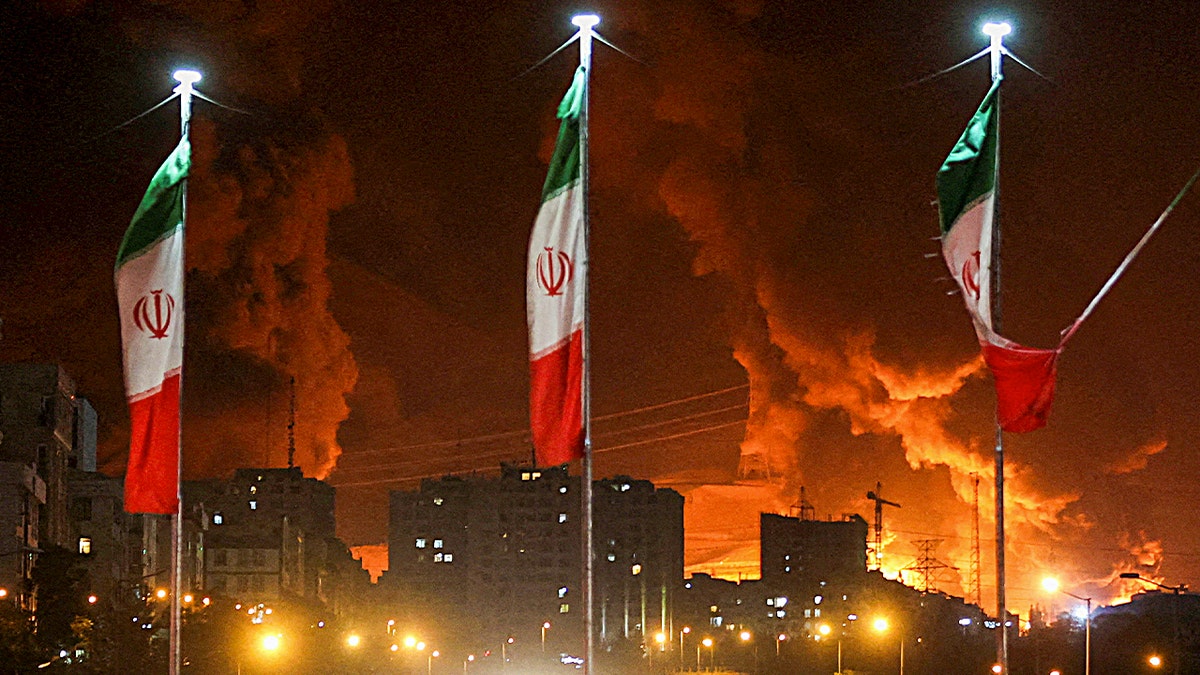
The ceasefire was never really a peace. It was a pause — fragile, contested, and punctuated almost from the start by accusations of bad faith. On Monday, the 100th day of the Iran war, that pause appeared to collapse, as Israel and Iran exchanged direct strikes in the most serious crossfire since the truce was reached in April, reviving fears that the wider Middle East could be dragged back into open, full-scale war.
In the predawn hours, Israel launched waves of air raids on central and western Iran, describing them as a response to Iranian missile fire. Tehran answered with successive barrages of its own. Explosions rolled over central Israel as air-defense batteries worked to intercept incoming projectiles, and the threat radiated outward: missile sirens sounded across neighboring Jordan, and Yemen's Houthi rebels joined the fray, firing toward Israel and warning that they would once again target Israel-affiliated shipping in the Red Sea. In a single night, a conflict that had been simmering threatened to boil over into something far harder to contain.
How the latest escalation began
The immediate trigger, by most accounts, was an Israeli strike on the southern suburbs of Beirut — a Hezbollah stronghold — carried out without warning and in defiance of a request from Washington, made only days earlier, to stand down. Tehran had spent the weekend warning that it would retaliate for what it characterized as repeated violations of the ceasefire, pointing in particular to Israeli operations in Lebanon. When Israeli missiles landed in Iran's interior and Iranian missiles arced back toward Israeli territory, the two sides found themselves once again locked in the kind of direct, state-to-state exchange that the April truce had been designed to end.
What makes this round especially combustible is the involvement of multiple actors at once. The Houthis' renewed threats against Red Sea shipping reopen a front that had badly disrupted global trade in previous phases of the conflict. The sirens in Jordan are a reminder that missiles and interceptors do not respect borders, and that neighboring states with no direct stake in the fighting can be pulled into the danger zone simply by geography. And the strike on Beirut underscores that the war has never been confined to Israel and Iran alone — Hezbollah, the Lebanese Shiite militia long backed by Tehran, remains both a participant and a flashpoint.
A war that began with assassination
To understand why this conflict has proven so difficult to end, it helps to recall how it began. The Iran war erupted in late February, after the breakdown of negotiations between the United States and Iran. In a dramatic and unprecedented opening move, Israeli and U.S. forces killed Iran's supreme leader, Ayatollah Ali Khamenei, along with other senior Iranian officials. The decapitation strike was meant to be decisive. Instead, it set off a grinding conflict that has now stretched past 100 days.
The fighting raged until early April, when the two sides reached what was described as a nominal ceasefire. But "nominal" turned out to be the operative word. A durable end to hostilities has been repeatedly frustrated by a set of intractable problems: Iran's chokehold on the Strait of Hormuz, the narrow waterway through which roughly a fifth of the world's traded oil and natural gas flowed in peacetime; the continued fighting between Israel and Hezbollah along the Israeli-Lebanese frontier; and the absence of any agreement addressing the deeper questions of Iran's nuclear program and missile arsenal that animated the conflict in the first place.
Each of these issues is, on its own, a potential war-starter. Together, they have made the ceasefire less a settlement than a holding pattern — one that any sufficiently provocative act could shatter. Monday's exchange appears to have been exactly that kind of act.
Trump's role and the diplomacy under strain
President Trump has positioned himself at the center of the diplomatic effort, and his fingerprints are all over the latest developments. According to reports, he urged restraint in a phone call with Israeli Prime Minister Benjamin Netanyahu as the strikes unfolded. At the same time, he told the Financial Times in characteristically blunt terms that he is the one directing events — that, in effect, he calls the shots.
That assertion of control sits awkwardly against the facts on the ground. The Israeli strike on Beirut went ahead despite Washington's request, days earlier, that Israel hold off. Mediators working to broker a lasting agreement between Iran and the United States were reported to be furious about the Beirut operation, which landed in the middle of an active and delicate negotiation. Among those mediators, Pakistan-led efforts had been gaining some traction; the strike, by several accounts, threatened to derail that progress and inflamed tensions among the very parties trying to keep the peace.
This gap — between the projection of American command and the reality of allies and adversaries acting on their own timelines — is one of the defining features of the current moment. It raises uncomfortable questions about how much leverage Washington actually has, and whether the diplomatic track can survive the military one.
Echoes of a rocky truce
For observers who followed the earlier phases of the Iran-Israel confrontation, Monday's events carried a grim familiarity. The April ceasefire, like the one before it, was marked from its earliest hours by mutual accusations of violation. Israel has repeatedly framed its operations as responses to Iranian provocations; Iran has just as consistently denied firing first and cast Israeli strikes as the true breaches. Each side has built a narrative in which it is the aggrieved party reacting to the other's aggression — narratives that are difficult to reconcile and that leave little room for the kind of trust a durable peace would require.
That pattern matters because it shows how easily a ceasefire can be unwound. It does not take a formal declaration of renewed war; it takes only a strike, a retaliation, and a competing set of claims about who is responsible. The mechanisms that might de-escalate — back-channel mediation, public appeals for calm, the personal diplomacy of a U.S. president — have so far proven able to interrupt the fighting but not to resolve the underlying disputes that keep reigniting it.
What is at stake
The stakes extend well beyond the borders of Israel and Iran. The Strait of Hormuz is not an abstraction; it is one of the most important arteries in the global economy, and any sustained disruption there ripples outward into energy prices and supply chains worldwide. The Red Sea, where the Houthis have threatened to resume attacks on shipping, is another such artery. A return to full-scale war would put both at risk simultaneously, with consequences that would be felt far from the Middle East — at gas pumps, in shipping costs, and in the broader rhythms of international trade.
There is also the human dimension, which the strategic framing can obscure. Each barrage and each interception represents real danger to civilians on both sides and in the neighboring states caught in between. The sirens in Jordan, the explosions over central Israel, the strikes in Iran's interior cities — these are not merely data points in a geopolitical contest. They are moments of fear for the people living beneath them.
An uncertain road ahead
As of Monday, the situation remained fluid and the outcome uncertain. The renewed exchange could prove to be another spasm in a long pattern of flare-ups followed by uneasy calm — a violent reminder of the ceasefire's fragility that ultimately gives way, once again, to a tense pause. Or it could mark the beginning of a more sustained breakdown, one that pulls in Hezbollah, the Houthis, and possibly other actors, and that overwhelms the diplomatic machinery struggling to hold things together.
Much will depend on choices made in the coming hours and days: whether Israel and Iran each decide that they have made their point and can afford to step back, or whether the logic of retaliation carries them forward; whether the mediators, despite their anger, can find a way to reopen channels of communication; and whether Washington's influence, real or asserted, can be brought to bear in the direction of de-escalation rather than escalation.
What is clear is that 100 days in, the Iran war has not found its ending. The conflict that began with an assassination in late February has settled into a punishing rhythm of fighting and pausing, of ceasefires announced and ceasefires broken. Monday's strikes are the latest evidence that the forces driving the war remain unresolved — and that the region, and the world, are not yet out of danger.
This is a developing story. Casualty figures, military claims, and diplomatic developments were still emerging at the time of writing and may have changed since. Reporting on active armed conflicts is often incomplete and subject to revision; claims by all parties should be treated with appropriate caution.