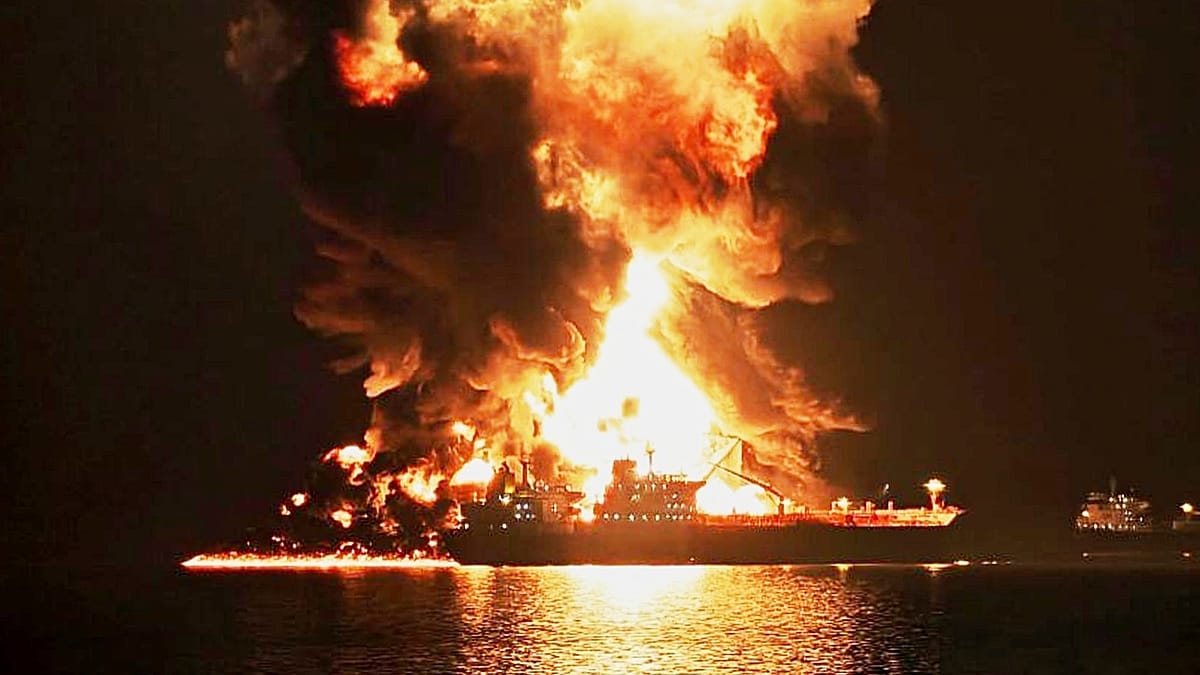
On February 28, 2026, the United States and Israel launched coordinated airstrikes on Iran under the codename Operation Epic Fury. The strikes targeted military facilities, nuclear sites, and Iranian leadership. Supreme Leader Ali Khamenei was killed. Iran's nuclear program was set back by years. And the Strait of Hormuz — the narrow waterway through which twenty-five percent of the world's seaborne oil and twenty percent of its liquefied natural gas passes — was closed.
Three months later, oil is back at $100 a barrel. The strait remains contested. A ceasefire agreement is described as "mostly agreed" but still unsigned. The U.S. military is warning it is ready to resume combat if talks collapse. And the American public is watching gas prices, watching the news, and trying to understand how a war that was supposed to be decisive has produced something that feels like it has no clear ending.
How the War Started and What It Achieved
The Trump administration's decision to strike Iran was the product of months of escalating tensions over Iran's nuclear program, its support for proxy forces in the region, and its attacks on American military assets in the Gulf. The decision to make the strikes comprehensive — targeting leadership, not just facilities — represented a strategic bet that decapitating the Iranian government would accelerate the country's collapse or produce a successor leadership more willing to negotiate.
That bet has produced mixed results. Khamenei's death did create leadership chaos in Tehran. The Iranian nuclear program was significantly degraded. Several of the proxy networks Iran had funded and armed across the region were disrupted by the loss of their central command and financing. In those terms, Operation Epic Fury achieved what it set out to achieve.
What it did not achieve was a quick resolution to the Strait of Hormuz crisis. Iranian forces, acting on orders given before the strikes and continuing under successor military commanders, declared the strait closed beginning March 4. Attacks on commercial shipping attempting to transit the strait have created an effective blockade of the world's most critical energy chokepoint. The economic consequences have been global and severe.
The Oil Price Roller Coaster
Global oil prices spiked dramatically when the strait closed, touching $140 per barrel in mid-March before receding as buyers adapted, alternative supply routes were developed, and strategic petroleum reserves were released by the U.S. and its allies. When Trump signaled in mid-May that he was pulling back from a planned new wave of military strikes to allow ceasefire negotiations more time, oil fell more than ten percent in five days — the market's response to the possibility of a negotiated resolution that would reopen the strait.
Then new U.S. strikes were launched. Oil jumped back to $100. The cycle — hope for ceasefire, strikes, price spike, hope for ceasefire — has played out multiple times since March and has created extraordinary volatility in energy markets that affects everything from airline tickets to grocery prices to the cost of heating and cooling American homes.
The economic impact on ordinary Americans has been significant. Average gas prices nationally have been elevated for months. The inflation that had been gradually receding from its post-COVID peaks has been pushed upward again by energy costs. The political implications of $100 oil sustained through the summer and into the fall midterm election period are not lost on the administration, which is why the ceasefire negotiations have a particular urgency that goes beyond the geopolitical.
The Ceasefire Talks
Negotiations for a ceasefire and a framework for reopening the Strait of Hormuz have been ongoing through intermediaries in Oman and elsewhere. The outlines of what is "mostly agreed," according to sources familiar with the talks, include a 60-day memorandum of understanding that would pause military operations, allow commercial shipping through the strait under some form of international oversight, and begin negotiations on Iran's nuclear program under a new framework.
What remains unresolved — the gap between "mostly agreed" and signed — involves the specific terms of the inspection regime for Iranian shipping, the conditions under which the U.S. and Israel would guarantee not to resume strikes, and the political question of which Iranian figures the successor government can allow to participate in an agreement that will inevitably be characterized domestically as capitulation to American military pressure.
Trump has not signed off on the current terms. His public statements have been characteristically oscillating — warning of devastating consequences if Iran does not agree, then suggesting a deal is close, then threatening new strikes. The pattern has made it difficult for Iranian negotiators to know which signals represent actual positions and which represent negotiating theater.
The Military's Warning
Defense Secretary Pete Hegseth's statement that the U.S. military is "ready to resume combat in the Gulf if needed" is not a bluff. American naval and air assets in the region have been maintained at elevated readiness since the February strikes. The military option is real and available. Whether Trump exercises it depends on whether the ceasefire talks produce an agreement, and whether that agreement holds.
For the American public, the question that has no clean answer is what success looks like from here. The nuclear program was degraded. Khamenei is dead. The strait is still contested. Oil is at $100. A deal is close but not signed. The war that was supposed to be decisive has produced outcomes that are real but incomplete, at costs — in lives, in treasure, in economic disruption — that are still being tallied.
The answer to what comes next is being written right now in negotiating rooms in Oman. The world is watching the oil price for signals about how those negotiations are going.