Down to the Wire: How a Surprise Personnel Move Pushed America's Top Spy Law to the Brink
With a Friday, June 12 deadline hours away, a routine surveillance reauthorization has collided with a fight over executive power — and Section 702 may lapse for the first time in its history.
For nearly two decades, the reauthorization of Section 702 of the Foreign Intelligence Surveillance Act has followed a familiar script. The deadline approaches, intelligence leaders warn of catastrophe, privacy advocates demand reforms, and Congress — after much hand-wringing — renews the program with modest changes. This week, that script has broken down. As lawmakers stare down a Friday, June 12 deadline, the country's most consequential foreign-surveillance authority is closer to expiring than at any point since it was written into law in 2008. And the reason has less to do with surveillance policy than with a single, unexpected personnel decision by President Donald Trump.
What Section 702 actually does
Section 702 authorizes the government to collect the communications of foreigners located outside the United States without a warrant, drawing on the compelled cooperation of American telecommunications and technology companies. Intelligence officials describe it as one of their most valuable tools for tracking terrorists, foreign spies, and hostile state actors. The catch — the one that has divided Congress for years — is that those foreign targets routinely communicate with Americans, and when they do, the contents of those exchanges are swept into government databases. Agencies, including the FBI, can then search that trove for information about U.S. persons, and they have done so hundreds of thousands of times. Critics across the political spectrum argue that those "backdoor" searches let the government read Americans' communications without ever obtaining a warrant from a judge.
The program was last reauthorized in April 2024 through the Reforming Intelligence and Securing America Act, which gave it a two-year runway rather than the longer extensions of the past. That clock ran out this spring, setting up the current crisis.
Two punts and a deadline
Congress has already kicked this can twice in 2026. In late April, the House passed a three-year extension by a vote of 235 to 191, with a notable bloc of Republicans defecting and a chunk of Democrats crossing over. But the measure stalled in the Senate, complicated in part by unrelated provisions House Republicans had attached. With the program days from sunset, both chambers agreed to a 45-day "clean" extension — the Senate by unanimous consent, the House by a lopsided 261 to 111 — that pushed the reckoning to June 12 and bought time for negotiators to hammer out a reform package.
For weeks, that effort appeared to be working. A bipartisan group of senators was converging on a compromise that would extend the program for three more years while tightening its rules: drastically narrowing who inside the government can approve queries involving Americans and requiring after-the-fact review of those searches. The bill stopped short of the change privacy hawks wanted most — a requirement that agents obtain a probable-cause warrant before searching Americans' data — but it represented a genuine, hard-won middle ground. Passage looked plausible.
The wrench: Bill Pulte at DNI
Then the president changed the equation. Trump named Bill Pulte, who already runs the Federal Housing Finance Agency, as acting Director of National Intelligence — the official who would oversee the very surveillance program Congress was about to renew. The reaction on Capitol Hill was swift and, unusually, bipartisan.
Pulte's qualifications became an immediate flashpoint. He has no national-security background, and lawmakers in both parties questioned whether he belonged anywhere near the country's intelligence apparatus. Democrats raised a sharper alarm: they pointed to Pulte's record at the housing agency, where they say he used his perch to refer a string of the president's political adversaries for prosecution over alleged mortgage fraud. To them, handing such a figure control of a warrantless surveillance program was precisely the danger that reform was meant to guard against.
The objections hardened into a wall. A growing number of Democrats declared they would not vote to renew Section 702 so long as Pulte served as acting DNI. House Minority Leader Hakeem Jeffries went further still, saying he would not support reauthorization unless Pulte was removed from the role altogether. Senate Minority Leader Chuck Schumer characterized the appointment as a hastily arranged arrangement rooted in loyalty rather than national security, and warned that its timing could hardly have been worse. Even some Republicans, including figures who had voiced reservations about Pulte before, signaled discomfort.
The math turned quickly. On June 5, the Senate tried to advance the bipartisan package and failed, with a procedural vote collapsing 47 to 52 as seven Republicans joined Democrats to block it. What had been a workable compromise was suddenly stranded.
A standoff between two branches
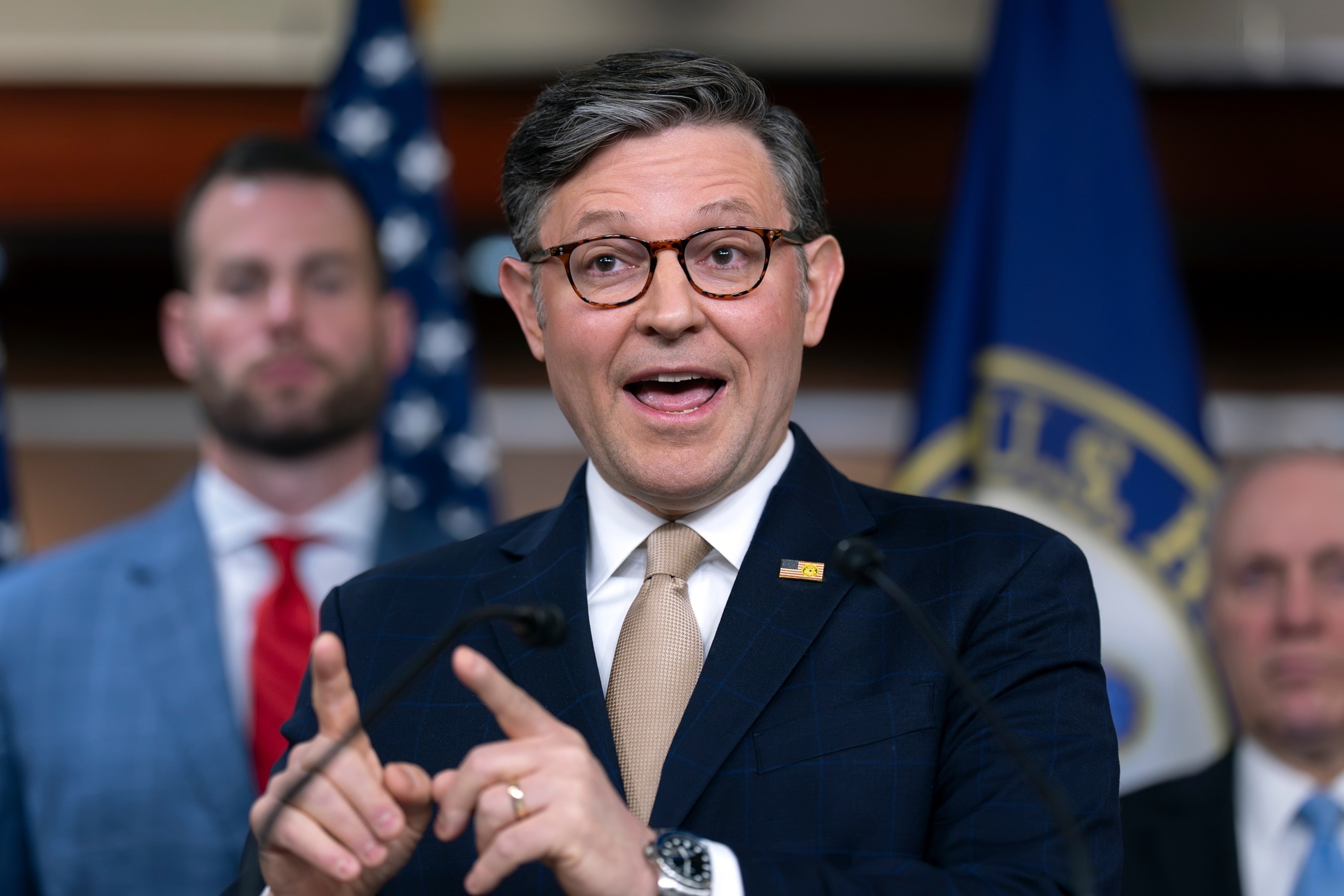
By the second week of June, the dispute had escalated from a surveillance debate into a test of wills between the White House and Congress. Speaker Mike Johnson met with Trump on June 9 to try to find a path forward, but the president has reportedly told the speaker he will not back down on Pulte despite the threat to one of his own administration's stated priorities. That leaves Johnson and Senate Majority Leader John Thune in an awkward bind: they want the program renewed to avoid a lapse, but they cannot easily deliver the votes while the president refuses to remove the man who triggered the revolt.
Thune, meanwhile, is juggling Section 702 alongside a crowded legislative to-do list, including looming fights over funding for the Department of Homeland Security. The surveillance deadline is competing for floor time it can ill afford to lose.
The most likely escape hatch, as it has been all year, is another short-term extension — a third punt that would defer the fight by weeks. Whether even that can pass is uncertain, since the Pulte objection applies to any vote that keeps the current arrangement in place.
Would the lights actually go out?
Intelligence leaders have warned that a lapse could be disastrous. Senator Chuck Grassley, chairman of the Judiciary Committee, made the case vividly on the Senate floor on June 8, invoking the 2024 plot against a series of Taylor Swift concerts in Vienna that Austrian authorities thwarted with intelligence shared by the United States — intelligence he attributed to Section 702. He warned that allowing the authority to lapse is, in his words, "a gamble we can't afford to take." Officials also caution that a lapse could create legal uncertainty for the telecommunications and technology companies compelled to assist, raising the prospect that some might resist or sue rather than risk liability.
But a chorus of legal experts and civil-liberties groups argues the "going dark" warnings are overstated. The Foreign Intelligence Surveillance Court recertified the program in March 2026, and those certifications run for roughly a year — meaning the National Security Agency and other agencies could keep collecting under existing authorizations until around March 2027 even if the statute itself expires on June 12. The Cato Institute has bluntly characterized the catastrophe framing as a pressure tactic designed to stampede Congress into clean extensions without reforms, rather than a factual description of what a lapse would do. The Electronic Frontier Foundation has made a parallel argument, contending that the built-in grace period gives lawmakers room to hold firm on a warrant requirement. Even some reauthorization supporters concede that the immediate harm of a brief lapse would be litigation and oversight gaps rather than a sudden blindness to foreign threats.
The deeper worry for privacy advocates cuts the other way: if a lapse stretched past the certifications' 2027 expiration, the government could fall back on older, murkier authorities — such as the Reagan-era Executive Order 12333 — that come with even fewer guardrails and almost no congressional oversight. In that scenario, the people most eager to rein in surveillance could end up with less accountability, not more.
What to watch
By Friday night, one of three things will likely have happened: Congress will pass another stopgap extension and live to fight another day; lawmakers will strike a last-minute deal that somehow defuses the Pulte objection; or the statute will lapse for the first time in its history, with the program limping forward on existing court certifications while litigation and political recriminations pile up.
What makes this episode different from past 702 fights is that the substance of surveillance reform has, for the moment, taken a back seat. The warrant-requirement debate that has consumed Congress for years is still unresolved, but it is no longer the obstacle. The obstacle is a single appointment — and the question of whether the legislative branch can use a hard deadline to force the executive's hand. However Friday plays out, that larger contest over who controls the machinery of American surveillance is unlikely to be settled by midnight.