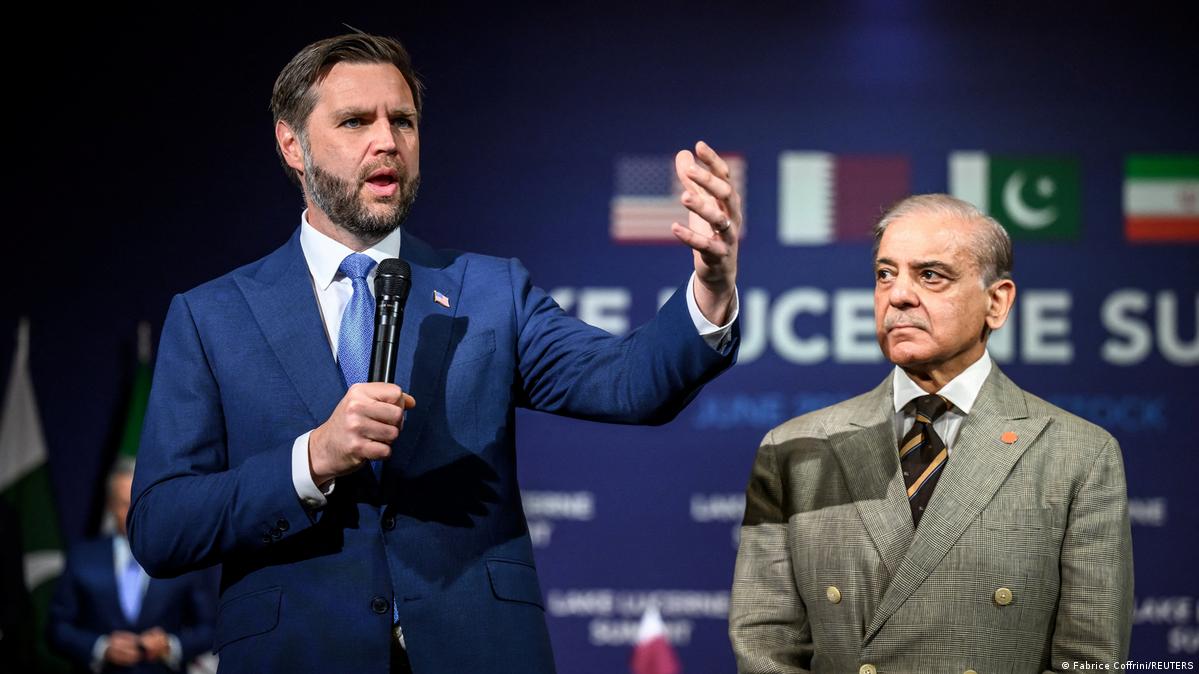
US and Iranian negotiators reconvened in Switzerland on Monday, picking up where a marathon first day of discussions left off. That opening round produced something both delegations could point to as progress: a 60-day roadmap toward a broader agreement, along with newly established mechanisms to address two of the most volatile flashpoints in the conflict — the Strait of Hormuz and the war in Lebanon.

The setting was the Bürgenstock resort overlooking Lake Lucerne, a venue chosen as much for its seclusion as its symbolism. Switzerland, long a neutral host for high-stakes diplomacy, welcomed what officials there described as constructive overnight progress. For a process that has repeatedly teetered on the edge of collapse, simply keeping both sides at the table through the night counted as an achievement.
The talks build directly on a memorandum of understanding signed last week — an agreement that extended a tenuous ceasefire by 60 days and, crucially, created the diplomatic channel that made the Switzerland summit possible. The MoU was never meant to be a final settlement. It is better understood as a framework, a set of guardrails designed to keep a fragile truce from unraveling while negotiators tackle the harder questions that remain unresolved.
What the First Round Actually Produced
The most concrete outcome of the opening session was structural. Negotiators agreed to create a series of working groups, each tasked with one of the thorniest dimensions of the dispute. There is an oversight committee to provide political direction, a sanctions group to work through the question of economic relief, and a nuclear group charged with the single most contentious issue dividing the two governments.
A high-level committee will sit above these working groups, providing political oversight of the entire mediation effort. Chief negotiators are expected to report to that committee regularly, an arrangement meant to ensure that technical talks do not drift without political accountability. The architecture suggests both sides are bracing for a long process rather than a quick breakthrough.
Beyond the committees, a Lebanon deconfliction mechanism emerged as one of the most closely watched products of the first round. The mechanism is designed to halt military operations in southern Lebanon, where fighting between Israel and the Iran-backed group Hezbollah has continued even as the broader ceasefire took hold. Negotiators agreed to establish what they described as a deconfliction cell — a coordination channel involving the parties, the Lebanese state, and the mediators — to enforce the termination of hostilities there. In practice, this Lebanon arrangement has become an early test of whether the ceasefire can survive contact with reality.
The Cast at the Table
The American delegation is being led by a notably high-profile trio. Vice President JD Vance has taken a front-line role, framing the effort as an attempt to turn over a new leaf with Tehran. Alongside him are Steve Witkoff, the administration's lead Middle East envoy, and Jared Kushner, whose involvement signals how personally invested the White House is in the outcome.
Vance has publicly emphasized that a central American objective is securing Iran's enriched uranium stockpile to make it, in his words, effectively impossible for Tehran to reconstitute a weapons program. He has also stressed that the United States retains substantial economic leverage should Iran fail to honor its commitments — a reminder that the diplomatic track runs parallel to a still-loaded pressure campaign.
The mediation itself is being conducted by Qatar and Pakistan, two governments that have positioned themselves as essential intermediaries. Pakistan's role has been especially prominent: the original framework was signed in Islamabad and is sometimes referred to as the Islamabad Memorandum of Understanding, with Prime Minister Shehbaz Sharif formalizing the breakthrough as a mediator. Qatar, a major energy producer with its own deep stakes in regional stability, has lent both diplomatic weight and the trust of multiple parties to the effort.
The Hardest Question: Iran's Nuclear Program
If the first round revealed anything, it was how far apart the two sides remain on the nuclear file. The two delegations could not even agree on whether the subject had been discussed. Iranian state television reported that the nuclear program — the single thorniest issue — was not addressed at all during the initial 80-minute session. The American side told a starkly different story, with a senior US diplomat insisting that negotiators had held robust discussions on all elements of the nuclear deal and intended to use the day's work as a starting point for ongoing technical talks.
That discrepancy is more than a public-relations skirmish. It reflects the deep mutual distrust that has shadowed every round of US-Iran diplomacy. Each side has strong incentives to shape the narrative for its domestic audience — Tehran wary of appearing to concede on a program it casts as a sovereign right, Washington eager to show its hawks that nuclear concerns sit at the center of the talks.
The substance is genuinely hard. The framework commits Iran not to acquire a nuclear weapon, but it does not yet specify an enforcement mechanism. Questions about uranium enrichment levels and the fate of Iran's existing stockpile of highly enriched material have been deliberately deferred into the 60-day window. The roadmap, in other words, is a promise to keep talking about the issues most likely to blow the process apart.
The Strait of Hormuz and the Specter of Escalation
Running alongside the nuclear question is the matter of the Strait of Hormuz, the narrow waterway through which a significant share of the world's oil passes. Under the memorandum, both sides agreed to reopen the strait toll-free for at least 60 days and to end hostilities. American negotiators said part of their work involved clarifying what they called confusing messaging from Iran about the strait and building deconfliction mechanisms to keep it fully open.
The waterway has also become a vehicle for pressure. President Trump warned over the weekend that the United States could impose tolls on vessels transiting the strait if negotiations fail to produce a lasting agreement before the ceasefire expires. He went further in remarks to reporters, suggesting the US might take over the strait if necessary and threatening to use overwhelming force. When asked about Iranian statements asserting the right to enrich uranium, Trump told the Iranian president to watch his mouth and warned that the US could take over the rest of the country.
Those comments briefly rattled the talks. Iranian state media reported that negotiations were disrupted on Sunday following the president's remarks, before discussions resumed. The episode underscored how quickly the diplomatic track can wobble when rhetoric escalates — and how little margin for error the process carries.
Israel on the Outside, Looking In
One of the defining features of the Switzerland talks is who is not in the room. Israel, which launched its campaign against Iran in partnership with the United States, has been excluded from the negotiations, and the terms of the memorandum have generated deep unease in Jerusalem. Israeli officials across the political spectrum have read the emerging agreement as a poor bargain — one struck while keeping Israel away from the text.
Prime Minister Benjamin Netanyahu has distanced himself from the framework and continued to insist that stopping Iran's nuclear program is, in his telling, a sacred mission. He has vowed that he will not allow Iran to acquire nuclear weapons as long as he remains prime minister, and he has framed the recent war as having created conditions for the potential fall of the Iranian regime. The Lebanon dimension is especially fraught: Israel has kept up operations against Hezbollah even as the memorandum calls for a ceasefire there, which is precisely why the new deconfliction cell will be watched so closely.
A Roadmap, Not a Destination
For all the activity in Switzerland, it is worth being clear-eyed about what has and has not been achieved. The memorandum is a framework, not a treaty. It is broad to the point of ambiguity, engineered so that nearly every decisive question — enrichment, sanctions relief, the drawdown of forces, the permanent end of the war — is pushed into the 60-day negotiating window. The immediate gains are real but modest: an exit from the most acute phase of the conflict, room for diplomacy, a path for Iran to resume oil exports, and a gradual return of regional shipping.
The deferred questions are the ones that matter most, and they are deferred precisely because they are the hardest to resolve. Iran's missile program and its network of regional allies were left out of the framework entirely. The nuclear enforcement mechanism remains undefined. And the entire structure rests on a ceasefire that has already been strained by continued fighting in Lebanon and by combustible rhetoric from Washington.
Technical discussions are expected to continue at the Bürgenstock resort through the week, with both sides working toward a final agreement within the 60-day timeline. Whether that roadmap leads anywhere durable will depend less on the committees and cells established this week and more on a quality that has been in short supply for decades: trust. As one analyst put it, the coming weeks will measure each side's will to implement what it has signed — and determine whether the conditions for something lasting exist at all.